The Decameron by Giovanni Boccaccio remains a cornerstone of early modern literature, offering a vivid panorama of human behavior, wit, and storytelling tradition. This article highlights five notable editions and translations that American readers often access for study, pleasure, or scholarly reference. Each entry presents a concise snapshot of what makes the edition distinctive, including translator notes, introductions, and editorial framing that enrich the classic tales.
Summary of Selected Editions
| Edition | Editor/Translator | Notable Feature |
|---|---|---|
| Tales from the Decameron (Penguin Classics) | Peter Hainsworth (Editor, Translator); Introduction | Accessible modern English with scholarly introduction |
| The Decameron: The Classic Translation of John Payne | John Payne (Translator) | Classic 19th–20th-century English prose style |
| Tales from the Decameron (Book League of America) | Richard Aldington (Translator) | Concise, readable translation with mid-century sensibility |
| The Decameron (Translated with an Introduction by J. M. Rigg) | J. M. Rigg (Translator) | Scholarly apparatus and commentary |
| The Decameron | Multiple editions; basis for modern editions | Flexible reference point for readers and researchers |
Tales From The Decameron — Penguin Classics

The Penguin Classics edition presents a carefully modernized English translation paired with a concise introduction and scholarly notes. The editor, Peter Hainsworth, provides contextualization that helps readers grasp Boccaccio’s social panorama and narrative technique. This edition is praised for readability without sacrificing historical nuance, making it well-suited for both classroom study and personal reading. It includes annotations that illuminate cultural references, social norms, and literary allusions that recur across the tales.
Key features include a comprehensive introduction outlining the structure of the collection, an index of proper names, and accessible prose that remains faithful to the original voice. The translation aims to balance verbosity and clarity, preserving the humor, irony, and moral ambiguity that define the Decameron. Readers new to the work will appreciate the careful navigation through the frame tale and a rich selection of stories that showcase Boccaccio’s range from romance to satire.
In terms of utility, this edition serves as an excellent starting point for modern readers who want an authoritative but approachable English version. It also provides enough scholarly apparatus to support deeper study for literature courses. Whether you approach the Decameron as a historical document or as timeless storytelling, this Penguin Classics edition offers a durable bridge between medieval Europe and contemporary readers.
The Decameron: Classic Translation By John Payne
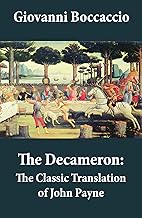
The John Payne translation is renowned for its crisp, readable style that captures the narrative energy of Boccaccio. Payne’s prose historically shaped English-language reception of the Decameron, and this edition preserves a sense of classical cadence while remaining accessible to modern readers. The translation is complemented by an editorial frame that places the stories within their Renaissance milieu, highlighting socio-political dimensions, gender dynamics, and the influence of travel and commerce on the tales.
Readers who prefer a traditional, flowing English translation will find Payne’s text engaging for both leisurely reading and academic reference. The edition is frequently used in literary studies for comparisons with later translations, enabling scholars to trace shifts in tone, diction, and interpretive emphasis across generations. It remains a reliable choice for those seeking a faithful yet literary rendering of Boccaccio’s celebrated collection.
Payne’s Decameron also appeals to readers interested in the stylistic evolution of English prose. The translation’s elegance supports close reading of nuanced scenes, particularly those that hinge on wit, satire, and social observation. This edition is best suited for readers who value a classic translation that emphasizes narrative flow and historical atmosphere alongside textual fidelity.
Tales From The Decameron — Book League Of America

This edition, edited for the Book League of America, features Richard Aldington’s translation, noted for its concise and readable English that remains faithful to the spirit of the original. Aldington’s approach tends to foreground narrative clarity and direct expression, making the tales accessible to a broad audience. An introduction and notes accompany the translation, offering historical context and biographical information about Boccaccio, as well as commentary on recurring motifs and social critique found in the stories.
Readers seeking a mid-20th-century English rendering with brisk pacing will find this edition compelling. The translation style emphasizes dialogue and character interaction, helping readers glean humor and irony in short, self-contained episodes. This makes the Book League edition a practical choice for readers interested in quick, immersive reading sessions without sacrificing interpretive depth.
In academic contexts, Aldington’s translation can function as a reference point for studies in translation history and reception. It provides a different tonal texture compared to later, more expansive translations, offering an opportunity to compare stylistic choices and how they shape readers’ perception of Boccaccio’s social worlds and narrative artistry.
The Decameron — Translated With Introduction By J. M. Rigg

J. M. Rigg’s translation is accompanied by an introduction that situates the Decameron within a broader literary and historical framework. This edition is favored by readers who appreciate scholarly apparatus, including critical notes on language, style, and thematic strands across the tales. Rigg’s approach tends to balance fidelity to the original Italian text with accessible English syntax, preserving Boccaccio’s narrative vigor while clarifying historical references for modern readers.
The introduction helps readers interpret the collection’s structure, the frame narrative, and the ethical questions raised by stories of love, cunning, and fortune. For students, this edition provides a solid base for textual analysis, with commentary that illuminates rhetorical devices, social satire, and the interplay between fate and agency in the tales. The translation’s clarity aids sustained engagement across multiple stories and thematic threads.
The Decameron — Classic English Edition

This edition provides another accessible English rendering of Boccaccio’s tales, often used as a reliable reference point for modern readers and students. The volume typically emphasizes readability alongside fidelity to the original, with careful attention to narrative flow, pacing, and dialogue. Readers may encounter a mix of literary praise for charm and critical notes addressing historical context and translation decisions.
For readers exploring different translations side by side, this edition offers a practical option to compare linguistic choices, tone, and structural emphasis. It is well-suited for coursework, literary analysis, and personal enjoyment, particularly for those seeking a balanced, traditional English presentation of the Decameron’s rich tapestry of stories.
Buying Guide: Key Purchase Considerations
When selecting a Decameron edition, consider translation philosophy, scholarly apparatus, and the reader’s goals. The following perspectives help readers choose the edition that best fits their needs:
- Purpose: For classroom study, editions with robust introductions, annotations, and a reliable textual foundation are advantageous. For casual reading, a readable translation with concise notes may suffice.
- Translator’s voice: Some readers prefer a modern, fluid English without archaisms, while others seek a more traditional or lyrically toned rendering that echoes the original prose style.
- Editorial content: Look for introductions that explain the historical and cultural context, as well as notes addressing recurring motifs, social norms, and rhetorical devices in the tales.
- Price and accessibility: Digital editions vs. print editions offer different accessibility options. Check for availability in Kindle or paperback formats, depending on reading preferences.
- Scholarly apparatus: If researching the Decameron, editions with critical essays, glossaries, and cross-references can be valuable for deeper analysis.
- Textual fidelity: Some translations prioritize close literal fidelity, others prioritize readability and narrative flow. Consider your tolerance for textual nuance and period language.
In sum, the right edition balances readability with fidelity, and aligns with your reading goals—whether it’s for academic exploration, personal enrichment, or classroom instruction. The five editions featured here offer diverse approaches to Boccaccio’s enduring collection, ensuring a well-rounded gateway to the Decameron’s world of stories, wit, and human insight.