Discover engaging reference books that help young readers explore Earth, history, the human body, and how things work. This guide highlights five top picks that balance visuals, facts, and age-appropriate explanations. Each title is well-suited for curious kids, students, or families seeking reliable information presented in an accessible way.
| Title | Author / Contributor | Image |
|---|---|---|
| The Animal Book: A Visual Encyclopedia of Life on Earth | David Burnie, Smithsonian Institution |  |
| History Year by Year: The History of the World, from the Stone Age to the Digital Age | DK | 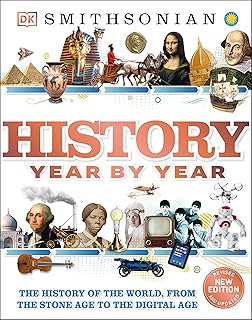 |
| Knowledge Encyclopedia Human Body! | DK, Smithsonian Institution |  |
| The Way Things Work: Newly Revised Edition | David Macaulay |  |
| The 50 States: Explore the U.S.A. with 50 fact-filled maps! | Gabrielle Balkan, Sol Linero |  |
The Animal Book: A Visual Encyclopedia
The Animal Book offers a vivid visual tour of life on Earth, combining photographs, illustrations, and accessible captions. It covers diverse habitats and species, highlighting unique adaptations, ecosystems, and conservation topics. The content is organized to support curious readers and classroom lessons, with sidebars and fact boxes that encourage quick skimming or in-depth reading.
Key features include wide-ranging animal profiles, clear diagrams, and a focus on biodiversity. The book serves as a broad introduction to zoology and natural history, making it suitable for elementary and middle school readers seeking reliable reference material with engaging visuals.
History Year by Year: The History Of The World
This year-by-year overview traces a long arc from ancient civilizations to modern digital cultures. It uses timelines, flip-through pages, and captioned illustrations to present major events in a kid-friendly format. The sequential layout helps readers build a sense of cause and effect across eras, while age-appropriate language keeps concepts approachable.
Readers gain context for how early innovations, politics, and discoveries shaped today’s world. The book pairs well with classroom history units or family reading sessions, offering quick reference alongside deeper exploration when desired.
Knowledge Encyclopedia Human Body!
This encyclopedia takes a comprehensive look at how the human body functions, with accessible explanations and vivid diagrams. It covers organs, systems, health basics, and fascinating facts about growth and development. The book’s structured sections and glossary help young readers find information quickly during research projects or personal curiosity.
Design elements such as infographics and labeled illustrations support visual learners. It serves as a solid reference for science units, homework help, or early research skills, offering a reliable foundation for understanding anatomy and physiology.
The Way Things Work: Newly Revised Edition
David Macaulay’s The Way Things Work explains the principles behind modern gadgets and everyday machines with engaging diagrams and concise explanations. The revised edition updates examples to reflect contemporary technology while preserving the book’s approachable style. The narrative helps readers connect abstract physics to tangible objects and processes.
The content blends storytelling with technical clarity, supporting STEM curiosity without overwhelming younger readers. It’s well-suited for school projects, library references, or family science time, providing a solid foundation for engineering, design, and critical thinking skills.
The 50 States: Explore The U.S.A.
This book invites kids to explore the United States through fifty maps and fact-filled entries. It blends geography with history, culture, and regional highlights to offer a compact, engaging reference. The maps provide visual anchors for memorization and spatial learning, supporting both classroom and home study.
Designed for curious readers who enjoy quick facts and colorful illustrations, it helps young learners build a national perspective. The format supports self-guided reading as well as collaborative learning, making it a practical addition to library shelves or classroom libraries.
Buying Guide
- Age appropriateness: Look for clear language and visual aids that match your child’s reading level and interest areas, whether animals, history, biology, or technology.
- Organization and navigation: Favor books with clear chapter breaks, glossaries, indexes, and labeled diagrams to support quick reference and independent research.
- Illustrations and visuals: High-quality photos, diagrams, and maps enhance understanding and retention, especially for visual learners.
- Depth vs. breadth: Choose titles that balance wide coverage with depth in specific topics to align with school curricula or personal curiosity.
- Reliability and scope: Prefer publishers known for science and history accuracy, with up-to-date information and diverse perspectives where possible.
- Format and durability: Hardcover or sturdy paperback can withstand frequent use by kids; consider illustrated formats for reluctant readers.
- Supplementary resources: Some titles include online resources or activity prompts that extend learning beyond the pages.
- Cross-curricular value: Books that connect science with geography, history, and technology support interdisciplinary projects and critical thinking.
When selecting reference books for kids, consider their current interests, reading level, and the way they like to explore information—visually, through narratives, or via interactive prompts. Pairing a general encyclopedia with topic-specific titles can provide a well-rounded foundation for lifelong learning and curiosity.