Discover leading titles that cover strategic risk planning, threat assessment, and proactive mitigation across portfolios, programs, and individual projects. This guide highlights top picks, comparing methodologies from PMI standards to practical, field-tested approaches. Each title offers insights for managers seeking to reduce uncertainty and improve outcomes in complex environments.
| Product | Brand / Author |
|---|---|
| Risk Management in Portfolios, Programs, and Projects: A Practice Guide | Project Management Institute PMI (Author) |
| Identifying and Managing Project Risk 4th Edition: Essential Tools for Failure-Proofing Your Project | Tom Kendrick (Author) |
| Risk Up Front: Managing Projects in a Complex World | Adam Josephs (Author), Brad Rubenstein (Author) |
| Project Risk Management: How to Avoid Failure | John Ayers (Author) |
| The Standard for Risk Management in Portfolios, Programs, and Projects | Project Management Institute (Author) |
Below are five carefully chosen titles that address risk from different angles, from overarching standards to practical tools for day-to-day project execution. Each entry includes a brief overview, core strengths, and why it matters for project teams, executives, and risk practitioners alike.
Risk Management In Portfolios, Programs, And Projects

The Practice Guide from PMI integrates risk management across the project lifecycle, offering a holistic framework for portfolios, programs, and projects. It emphasizes governance, stakeholder engagement, and value-driven decision making. The book aligns with established standards, making it a solid reference for risk professionals seeking consistency across initiatives.
Identifying And Managing Project Risk 4th Edition

This edition highlights practical tools for risk identification, assessment, and response planning. It emphasizes early risk detection and robust mitigation strategies, helping teams harden projects against common failure modes. The author provides actionable templates and checklists that can be applied across industries.
Risk Up Front: Managing Projects In A Complex World

The authors present a front-loaded approach to risk, focusing on uncertainty early in the project lifecycle. The book covers techniques for spotting high-impact risks, quantifying probabilities, and integrating risk decisions into strategy. It is particularly useful for teams navigating complex, uncertain environments.
Project Risk Management: How To Avoid Failure
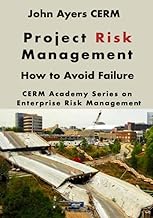
This title offers a concise, results-oriented guide to identifying risks early, assessing their potential impact, and implementing effective response plans. It emphasizes practical tools such as risk registers, qualitative and quantitative analysis, and governance practices designed to minimize project derailments.
The Standard For Risk Management In Portfolios, Programs, And Projects

As a formal standard, this book codifies best practices for risk governance at scale. It covers integration with portfolio management, program risk, and project-level risk responses, making it essential for organizations pursuing consistency and maturity in risk practices across multiple initiatives.
Buying Guide: Key Purchase Considerations
- Scope alignment: Choose titles that fit your role, whether you manage individual projects or oversee programs and portfolios.
- Standardization vs. practicality: If your organization follows PMI standards, the practice guide and standard are particularly relevant; for hands-on toolkits, Kendrick or Ayers offer actionable methods.
- Methodologies: Look for books that cover both qualitative and quantitative risk analysis, including risk registers, probability-impact matrices, and decision trees.
- Industry applicability: Some titles emphasize IT or construction risk; others are industry-agnostic and suitable for cross-sector use.
- Update cadence: Risk management practices evolve; prioritize newer editions or titles that incorporate modern approaches to uncertainty and agile/rig agile environments.
- Supplemental resources: Check for templates, worksheets, or online resources to complement the reading experience and accelerate implementation.
- Audience level: If you’re new to risk management, start with practical guides; for seasoned professionals, standards-aligned texts offer depth and governance.
- Practical applicability: Assess whether the book provides step-by-step processes, checklists, and real-world case studies you can apply immediately.
- Cross-referencing: Books that reference PMI standards or other recognized frameworks can help harmonize internal risk policy with external benchmarks.
For organizations pursuing comprehensive risk governance, combining a standards-focused reference with practical, tool-oriented guides typically yields the best results. Each title above contributes a different angle—governance, front-loaded risk, identification techniques, and project-level risk execution—allowing teams to build a robust, adaptable risk management approach.