For many Americans, discovering ancestry and ethnicity through DNA testing offers a path to understanding family history. This guide highlights five widely used, reliable options and compares what you get, from region-wide breakdowns to trait insights. Each product section links to its Amazon listing for quick access and includes key features to help you choose what fits your goals best. The following table summarizes the chosen products at a glance.
| Product | Brand | Region Coverage | Notes |
|---|---|---|---|
| AncestryDNA | AncestryDNA Store | 3,600+ regions | Popular for relative connections |
| AncestryDNA + Traits | AncestryDNA Store | 3,600+ regions | Traits adds appearance insights |
| 23andMe Ancestry Service | 23andMe Store | 4,500+ regions | Detailed regional map and timeline |
| MyHeritage DNA Kit | MyHeritage DNA Store | 42 regions listed | Broad ethnicity list and relatives |
| FamilyTreeDNA Family Finder | FamilyTreeDNA Store | Multiple regions | Chromosome Browser and ancient origins |
AncestryDNA Genetic Test Kit

The AncestryDNA kit is a top-seller designed to reveal origins in more than 3,600 places worldwide and connect users with living relatives. It emphasizes user control over genetic data, allowing individuals to decide what to share and with whom. Activation is straightforward: receive the saliva kit, send back the sample in the prepaid package, and access results online in about six weeks.
Core features include a broad ethnic breakdown, interactive experiences with family connections, and a simple online results portal. The kit is widely used for building family trees and tracing lines across generations while maintaining data privacy preferences.
AncestryDNA + Traits Genetic Test Kit

This option combines the broad AncestryDNA platform with traits analysis, offering insights into 75+ genetic traits alongside ethnicity estimates. The experience mirrors the standard AncestryDNA workflow—activate, mail back a saliva sample, and view results online in roughly six weeks—with an added dimension of trait exploration to understand personal characteristics that may be influenced by genetics.
Trait reports cover appearance, sensory experiences, and various personal attributes. The product emphasizes user data control and the ability to share results selectively, making it a good choice for users curious about both heritage and trait-based questions.
23andMe Ancestry Service
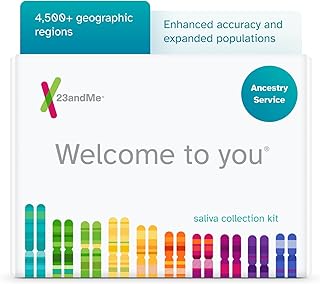
23andMe offers a detailed geographic breakdown across more than 4,500 regions and highlights historical population movements. In addition to ancestry, the kit provides a timeline to trace when recent ancestors lived in certain populations, Neanderthal ancestry, and paternal/maternal lineage insights. It also features a DNA Relative Finder and optional family tree integration for expanded genealogical context.
Trait reports illuminate over 30 personal characteristics—such as hair color, taste sensitivities, sleep patterns, and other phenotype-related details—helping users understand how genetics may influence daily life. The platform emphasizes data privacy controls and the ability to opt in to broader family connections.
MyHeritage DNA Kit

MyHeritage DNA emphasizes a wide ethnicity breakdown and family matching features, helping users identify relatives and build connections across generations. The kit uses a cheek swab and offers a relatively quick onboarding process, typically returning results after a brief processing period. It is known for a broad regional catalog and a user-friendly experience suitable for international connections and diaspora communities.
In addition to ancestry estimates, MyHeritage provides tools to explore ancestral origins and discover relatives who share DNA. The platform supports exploring migration patterns and provides user-friendly interfaces for genealogical exploration and tree-building.
FamilyTreeDNA Family Finder

FamilyTreeDNA’s kit emphasizes deep ancestry and genetic genealogy tools, including a Chromosome Browser and interactive matching to help users trace relatives and compare shared DNA segments. The platform highlights ancient origins, offering insights into Neolithic Hunter/Gatherer, Early Farmer, and Bronze-age lineages. It supports connecting with genetic relatives and exploring genealogical roots across multiple geographic regions.
The testing experience is designed for serious researchers and hobbyists who want detailed segment-level comparisons and robust ancestry analysis while enabling practical family networking through DNA matches.
Buying Guide
Key considerations when choosing a DNA ancestry test include geographic coverage, depth of analysis, and privacy controls. If the goal is broad, global region mapping with strong relative connections, a kit from AncestryDNA or 23andMe is typically strong. For trait insights, AncestryDNA + Traits and 23andMe provide additional reports that explore how genetics may influence appearance and behavior. For broader ethnic catalogs and international relatives, MyHeritage DNA offers a substantial regional list and a different matching experience.
Important features to evaluate:
– Region count and depth: More regions mean finer-grained ancestry estimates, but interpretation matters.
– Family matching: Relative finders help build networks across generations; consider how you plan to use these connections.
– Data privacy controls: Look for options to control data sharing, opt-ins, and data deletion.
– Optional trait reports: If you’re curious about genetic traits, trait modules add value.
– Tools for genealogy: Some platforms offer timelines, chromosome painters, and tree integration to visualize results.
Cross-platform considerations: If you are already building a family tree on one platform, you may prefer the corresponding DNA test to maximize compatibility and data integration. For multi-platform insights, consider sharing or importing data across services to expand the pool of relatives and regional detail while maintaining privacy settings.