From anatomy to technique guides, these top mixed martial arts books cover theory, strategy, and practical training. This article highlights five standout titles that help readers understand the sport’s science, history, and methods. Each entry includes a quick look at the author team and what you can learn, helping you choose the right book for your goals.
| Book | Author/Authors | Why Read |
|---|---|---|
| Delavier’s Mixed Martial Arts Anatomy | Frederic Delavier; Michael Gundill | In-depth anatomical insights for training and technique optimization. |
| Mixed Martial Arts: The Book of Knowledge | BJ Penn; Glen Cordoza; Erich Krauss | Foundational know-how across disciplines with practical pointers. |
| Mix Martial Arts: A Comprehensive Guide to Boxing, Brazilian Jiu-Jitsu, Muay Thai, etc. | Clint Sharp | Broad primer on major styles and cross-training strategies. |
| The Ultimate Mixed Martial Arts Training Guide | Danny Plyler; Chad Seibert | Techniques for fitness, self-defense, and competition preparation. |
| A Fighter’s Heart | Sam Sheridan | Firsthand perspective on the world of fighting and its culture. |
Delavier’s Mixed Martial Arts Anatomy

Delavier’s Mixed Martial Arts Anatomy combines detailed anatomical illustrations with practical fighting applications. Co-authored by Frederic Delavier and Michael Gundill, this book emphasizes how muscles work in various positions common to MMA striking, grappling, and transitions. Readers gain a clearer sense of how to optimize technique while reducing injury risk. The visual approach supports both beginners building foundational knowledge and experienced fighters refining specifics. Topics span joint mechanics, muscle groups, and how to train safely for maximal power and control in fights.
Mixed Martial Arts: The Book of Knowledge

Written by acclaimed fighters and coaches, Mixed Martial Arts: The Book of Knowledge offers a multi-disciplinary overview across boxing, Brazilian Jiu-Jitsu, Muay Thai, wrestling, karate, Taekwondo, Kung Fu, Judo, Sambo, and Capoeira. The book emphasizes core concepts such as stance, leverage, distance management, and transition skills. It presents practical drills and strategic insights drawing from competition experience, helping readers integrate techniques into a cohesive game plan. This title suits readers seeking broad exposure to MMA fundamentals and tactical frameworks.
Mix Martial Arts: A Comprehensive Guide to Boxing, Brazilian Jiu-Jitsu, Muay Thai, Wrestling, Karate, Taekwondo, Kung Fu, Judo, Sambo, and Capoeira for MMA Mastery
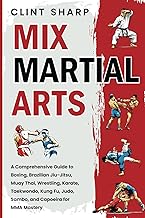
Clint Sharp’s Mix Martial Arts provides a broad survey of the major disciplines that shape MMA. The book outlines how each art contributes to a fighter’s overall toolkit, with emphasis on blending styles to counter opponents. Topics include stance, grips, clinch work, and finishing combinations across disciplines. Readers will find practical comparisons of striking and grappling modalities, plus strategies for cross-training that can help optimize conditioning and fight-readiness for competitions.
The Ultimate Mixed Martial Arts Training Guide

The Ultimate Mixed Martial Arts Training Guide focuses on practical techniques for fitness, self-defense, and competition. Authored by Danny Plyler and Chad Seibert, the book blends conditioning programs with technique demonstrations to help readers build a robust MMA regimen. Expect training plans that integrate cardio, strength, flexibility, and sport-specific drills. It’s structured to support both novice learners and intermediate athletes pursuing measurable performance gains while understanding the strategic underpinnings of MMA training cycles.
A Fighter’s Heart

A Fighter’s Heart by Sam Sheridan offers an intensely personal look at the culture and experiences surrounding the world of fighting. The book blends reportage, memoir, and reflective narrative to illuminate the motivations, risks, and rewards of pursuing combat sports. While not a technique manual, it provides context for the martial arts journey—from training and competition to the psychological and emotional dimensions that athletes encounter in and out of the ring or cage.
Buying Guide: Key Purchase Considerations for MMA Books
- Purpose and focus: Determine whether you want anatomical insight, broad style coverage, training plans, or a narrative exploration of fighting culture. The titles above range from technical manuals to immersive storytelling.
- Author expertise: Look for authors with hands-on competition experience or academic background in anatomy and coaching. This can influence the depth and reliability of the content.
- Illustrations and visuals: Books with clear illustrations or photos can enhance understanding of techniques and body mechanics, especially for beginners or visual learners.
- Cross-discipline emphasis: If you train in multiple styles, seek books that address integration across disciplines, transitions, and game plans rather than a single art form.
- Practical drills and structure: Favor titles that provide step-by-step drills, progression, and training plans aligned with common MMA workflows (conditioning, sparring, competition prep).
- Audience level: Some books are aimed at beginners; others are for advanced practitioners or coaches. Pick according to your current skill level and goals.
- Edition and updates: MMA is a dynamic sport; newer editions may reflect updated techniques or terminology, so check publication date when relevant.
- Supplementary resources: Consider whether additional online resources, videos, or companion guides are available to complement the book’s material.
In choosing among these titles, evaluate which aspects of MMA you want to deepen—anatomy and movement, cross-training discipline knowledge, or cultural perspective—then match that with the book’s strengths. Each option provides distinct angles on training, strategy, and understanding the sport.