Discover a curated selection of essential histories covering the breadth of Asia—from ancient civilizations to modern transformations. This guide highlights five well-regarded titles that illuminate Asia’s diverse past, helping readers compare approaches, periods, and regional focuses. Each entry includes a quick look at key features and a direct link for deeper exploration.
| Title | Author | Brief Focus |
|---|---|---|
| Asia: A Concise History | Arthur Cotterell | Broad sweep of Asian history with emphasis on cultural and political developments |
| A History of East Asia: From the Origins of Civilization to the Twenty-First Century | Charles Holcombe | Long view of East Asia from ancient roots to contemporary era |
| History of China: An Enthralling Journey Through Ancient Dynasties, Cultural Splendor, Revolution, and Modernization | Billy Wellman | Chinese history across dynasties, revolution, and modernization |
| China: A History | John Keay | Sweeping chronicle of China from earliest times to present |
| Genghis Khan and the Making of the Modern World | Jack Weatherford | Mongol empire and its impact on global history |
Asia: A Concise History — Overview

Arthur Cotterell’s Asia: A Concise History offers a brisk, accessible arc through the continent’s major civilizations, empires, and turning points. The book emphasizes cultural crosscurrents, trade networks, and the political shifts that shaped Asia’s varied landscapes. It’s well-suited for readers seeking a compact but informative primer with distinct chapters that connect ancient foundations to later developments. The narrative balances broad strokes with details on pivotal moments, making it a practical entry point for students and general readers alike.
Key features include a clear chronological structure, a focus on interregional interactions, and guidance on how Asia’s past informs its present. The book is compact enough for quick reference yet substantial enough to support introductory coursework or personal study. For readers who want a dependable overview without being overwhelmed by footnotes or specialized jargon, Cotterell’s volume excels as a first step into Asian history.
A History of East Asia: From Ancient Civilizations to Today
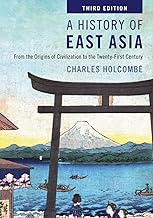
Charles Holcombe’s comprehensive work traces East Asia’s development from the dawn of civilization through the twenty-first century. The narrative covers China, Korea, Japan, and broader regional dynamics, highlighting political evolution, cultural exchange, and social change. Holcombe emphasizes long arcs—dynastic cycles, reform movements, and the influence of external contact—while situating East Asia within global history. The book’s breadth makes it a strong reference for readers seeking connections between ancient roots and modern realities.
The author integrates political milestones with social and intellectual currents, offering readers a cohesive sense of how East Asian societies adapted to shifting power structures, technology, and external pressures. It’s particularly helpful for those who want a solid framework to compare national histories within a single regional context.
History of China: Dynasties, Culture, and Modern Transformation

Billy Wellman’s History of China surveys the breadth of Chinese history with attention to dynastic changes, cultural achievements, and the forces that propelled modernization. The book traverses imperial grandeur, revolutionary movements, and the pragmatic shifts that shaped contemporary China’s trajectory. It integrates political narrative with cultural context, offering readers a clear sense of continuity and transformation across millennia.
Readers will encounter accessible explanations of complex topics, including governance, religion, and social organization, alongside vivid depictions of significant eras. The volume is well-suited for newcomers and readers seeking a reliable, readable survey that connects ancient milestones to 21st-century developments.
China: A History — A Comprehensive Chronicle

John Keay presents a sweeping chronicle of China that threads together political events, cultural milestones, and social transformations. The book emphasizes long-term processes, including the rise and fall of dynasties, major reform impulses, and China’s interactions with neighboring regions and global powers. Keay’s narrative benefits readers who want a coherent, long-range storyline that explains how historical forces shaped modern Chinese society and policy.
The prose is grounded in solid scholarship while remaining accessible to general readers. This work is particularly useful for students needing a broad yet detailed overview that supports more focused study of specific eras or themes in Chinese history.
Genghis Khan and the Making of the Modern World

Jack Weatherford’s Genghis Khan and the Making of the Modern World examines the Mongol empire’s impact on global history, challenging stereotypes and highlighting the empire’s administrative innovations, cultural exchanges, and military strategies. The narrative places Genghis Khan within a larger historical context, showing how Mongol rule altered trade routes, governance, and cross-cultural contact across Eurasia. It provides readers with a nuanced view of a complex figure whose legacy extends into present-day geopolitical patterns.
The book blends biography with empire-wide analysis, offering a balanced perspective that contrasts myth with measurable influence. It is a strong choice for readers who want a focused examination of one era while still appreciating its broader historical consequences across continents.
Buying Guide: Key Purchase Considerations And Comparisons
- Scope And Approach
- Broader surveys (like Cotterell and Keay) provide quick overviews ideal for beginners or non-specialists.
- More focused regional works (such as Holcombe or Wellman) offer deeper dives into specific areas or themes.
- Chronology And Structure
- Some titles progress chronologically from ancient to modern times, while others segment by region or era.
- Choose based on whether you prefer a continental through-line or a modular, region-focused arrangement.
- Depth Of Cultural Context
- Look for books that balance political history with social, cultural, and intellectual developments to gain a fuller picture.
- Accessibility matters; some works employ concise prose, others offer dense scholarly analysis.
- Academic Use And Practicality
- For coursework, check for cross-references, maps, and suggested readings that support further study.
- General readers may prefer narrative-driven accounts with engaging anecdotes and clear timelines.
- Geographical Coverage
- East Asia-focused books emphasize China, Korea, and Japan, while others cover a wider Asian panorama or subregions such as Central and South Asia.
- Determine whether you want a continental overview or a deeper look at a single country’s history.
- Author Background And Perspective
- Consider the authors’ expertise, potential biases, and the publication’s intended audience when evaluating reliability and tone.
- Compare multiple sources to triangulate a balanced understanding of complex histories.
- Supplementary Materials
- Maps, timelines, glossaries, and bibliographies add value, especially for readers new to the subject.
- Digital editions or companion websites can enhance engagement with maps and primary sources.
Comparative Quick Guide
- Best for a concise overview: Asia: A Concise History
- Best for a regional arc across East Asia: A History of East Asia: From the Origins of Civilization to the Twenty-First Century
- Best for a broad yet detailed China focus: History of China: An Enthralling Journey, or China: A History
- Best for a global perspective of Mongol influence: Genghis Khan and the Making of the Modern World
These titles collectively cover foundational histories, technical details, and broad narratives. Readers should consider their preferred level of depth, regional focus, and whether a chronological sweep or thematic organization best suits their learning goals. By examining multiple works, readers can build a richer understanding of Asia’s historical tapestry and its worldwide connections.