Civics education helps young learners understand how government works, their roles as citizens, and ways to participate in their communities. The following selections blend age-appropriate explanations with activities, everyday examples, and classroom-ready prompts to support elementary readers and their families in exploring civics concepts.
Overview of selected titles:
| Product | Author / Brand | Format | Key Focus |
|---|---|---|---|
| Scholastic’s Guide to Civics | Elliott Rebhun (Editor) | Nonfiction | How America Works; involvement opportunities |
| The Homeschool Citizenship Book | Angela Gonzalez (Author) | Guide / Daily Civics | Daily civics, character, community |
| How the U.S. Government Works: A Kid’s Guide to Civics | Syl Sobel J.D. (Author) | Informational | Government structure and processes |
| Daily Word Ladders: Grades 4-6 | Timothy V. Rasinski (Author) | Word study / Reading | Vocabulary, spelling, reading skills |
| 180 Days: Social Studies, Early Elementary | N/A (Author) | Practice workbook | Early social studies concepts in daily practice |
Scholastic’s Guide to Civics

The Scholastic Guide to Civics presents a clear overview of how the U.S. government operates and how individuals can participate in civic life. It covers topics such as the roles of citizens, the branches of government, elections, and daily civic actions kids can take. The editor-curated narrative uses accessible language and real-world examples to connect classroom learning with community involvement. Paired activities encourage students to reflect on their own communities and develop informed perspectives on civic responsibilities.
The Homeschool Citizenship Book

The Homeschool Citizenship Book offers a daily civics, character, and community guide tailored for elementary and middle school learners. Its structure supports consistent practice and reflection, helping students understand how their actions affect others and how to participate responsibly in school and neighborhood life. The book emphasizes a values-based approach, with activities that connect civics concepts to everyday decisions, collaborative projects, and community involvement opportunities suitable for independent study or family-guided lessons.
How the U.S. Government Works

This kid-friendly guide explains government structure, elections, and civic processes in approachable terms. It uses visuals, simple diagrams, and relatable scenarios to help young readers grasp how laws are made and how public institutions function. The book supports classroom discussions, helping students connect civics lessons with their own communities and daily experiences, while encouraging curiosity and critical thinking about governance.
Daily Word Ladders: Grades 4-6

While primarily a language arts resource, Daily Word Ladders supports civic learning by strengthening reading fluency and critical thinking skills essential for understanding and discussing civics topics. The collection offers 100 reproducible word study lessons that encourage students to analyze word meaning, infer context, and articulate ideas clearly—skills that aid comprehension of civics texts and participation in classroom debates or community projects.
180 Days: Social Studies
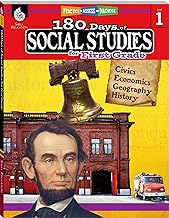
This early elementary social studies workbook provides structured practice for foundational concepts such as communities, citizens, maps, and national holidays. Designed for classroom use or homeschool settings, it delivers short activities aligned with typical curricula, enabling consistent reinforcement of civic knowledge and social studies skills across the school year. The format supports varied pace and independent work, with teacher or parent guidance as needed.
Buying Guide
- Age and reading level: Choose titles aligned with the child’s grade and reading ability. Some books offer visuals and guided activities, while others present more concise text suitable for independent reading.
- Curriculum alignment: Look for resources that map to common civics concepts—government structure, citizen responsibilities, elections, and community participation—to support classroom or homeschool goals.
- Format and usability: Consider whether a book is best as a read-aloud, a guided lesson, or a self-guided workbook. Daily activity books can reinforce learning through routine practice.
- Support materials: Manuals, visuals, and activity prompts can enhance engagement. Supplemental questions or projects help translate concepts into real-world applications.
- Universal accessibility: Image-rich layouts, clear diagrams, and concise explanations aid comprehension for diverse learners and non-native English speakers.
- Age-appropriate examples: Scenarios rooted in students’ communities help connect civics to daily life, increasing relevance and retention.
- Teacher and family suitability: Some titles are better suited for classroom discussion, while others are designed for homeschool settings or parent-guided lessons.
- Durability and format variety: Paperback, hardcover, or workbook formats offer different durability and reuse options for ongoing study or multiple children.
- Scope and depth: For beginners, start with broad overviews; for curious readers, select titles that offer deeper dives into specific topics like elections, local government, or civic participation.
- Cost considerations: When planning a library or classroom set, compare bundles or multiple-copy discounts to maximize value without compromising content quality.