Explore a curated selection of Korean-language children’s books that blend learning with play. Each title below uses interactive features, colorful illustrations, and bilingual content to support early language development for American families. From sing-along song books to engaging Korean-English board books, these picks help kids enjoy vocabulary, Hangul basics, and cultural exposure while reading at home or in classrooms.
| Product | Brand | Highlights |
|---|---|---|
| I Love to Sing in Korean: Animal Songs | Heritage Kids Press | Interactive songs, vivid art, cultural context |
| I Love to Sing in Korean: Songs | Heritage Kids Press | Rhythmic lyrics, bilingual appeal, catchy tunes |
| New! Learn Korean for Kids, Vol. 1 | Momo Learns Korean | Hangul basics, first words, audio songs |
| New! Learn Korean for Kids, Vol. 2 | Momo Learns Korean | Interactive sound, vocabulary building |
| New! Learn Korean for Kids, Vol. 3 | Momo Learns Korean | Structured phrases, engaging illustrations |
The selections emphasize oral language practice, visual storytelling, and practical Hangul exposure. Whether you’re building a bilingual home library or a classroom library, these titles provide reliable Korea-focused content designed for early learners.
Heritage Kids Press: I Love to Sing in Korean – Animal Songs

Heritage Kids Press presents an engaging interactive song book that invites children to sing along with Korean animal-themed tunes. The format supports language and vocabulary development through rhythm and repetition, helping kids absorb common phrases while enjoying bright, playful illustrations. The included songs emphasize cultural nuances tied to Korean animals and nature, fostering early exposure to Korean language patterns. This title is suitable for toddlers and preschoolers who benefit from sensory, auditory, and visual learning cues.
Features include language-playful learning, vibrant illustrations, and lasting impressions that connect kids with Korean language and culture. The rhythmic songs are designed to help children learn new words and phrases naturally, making it a strong option for early language acquisition and a broad addition to any child’s Korean-learning toolkit.
Heritage Kids Press: I Love to Sing in Korean – Songs
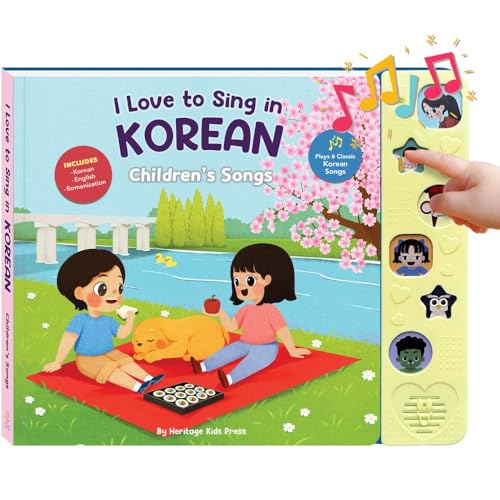
This interactive song book uses catchy Korean nursery rhymes to boost language familiarity and pronunciation. Children sing along to phrases that model everyday expressions, reinforcing vocabulary in an enjoyable, memorable way. The bright artwork further assists comprehension by providing visual anchors for new words and phrases, making this title a practical choice for early bilingual learners and a delightful addition to a child’s library.
Key attributes include language-friendly play, vivid illustrations, and opportunities to internalize Korean cultural themes through music. It’s well-suited for reading aloud sessions, classroom circle time, and at-home language practice, helping kids build a solid phonetic foundation while having fun with songs.
New! Learn Korean for Kids, Vol. 1 — Momo Learns Korean

Vol. 1 introduces Korean-English bilingual content in a durable board-book format, ideal for babies and toddlers. It combines engaging sound and music with first words to teach Hangul basics and practical vocabulary. The book emphasizes a soothing, natural voice — a real mom singing — to make the learning experience comforting and engaging. Batteries are included with simple controls, making it a user-friendly entry point for families exploring Korean language and culture.
Highlights include durable construction, bilingual vocabulary, and audio components that support pronunciation and listening skills. It’s designed to be safe and accessible for early learners, offering a hands-on way to begin Hangul recognition, sound-symbol associations, and early language play.
New! Learn Korean for Kids, Vol. 2 — Momo Learns Korean

Vol. 2 continues the bilingual journey, focusing on expanded vocabulary and more complex phrases while preserving the engaging audio experience. The book uses Hangul-friendly prompts and vivid illustrations to reinforce word associations and sentence structure. It serves as a bridge between basic recognition and practical usage, helping children apply simple Korean phrases in everyday contexts.
Key features include a continued emphasis on pronunciation, easy-to-use board-book design, and a smooth progression from foundational words to everyday expressions. This volume suits children who have completed Vol. 1 or are ready to advance their Korean language exposure through songs and short, readable phrases.
New! Learn Korean for Kids, Vol. 3 — Momo Learns Korean

Vol. 3 offers continued exposure to Hangul through structured phrases and engaging illustrations. This volume emphasizes practical language usage in daily routines, reinforcing vocabulary through songs and interactive prompts. The integrated audio component supports correct pronunciation and listening comprehension, while the book’s durable format keeps pace with active, curious learners.
The design supports independent exploration and guided reading alike, making Vol. 3 suitable for home learning, preschool classrooms, and parent-led practice sessions. It builds on earlier volumes to help children internalize sentence patterns and everyday Korean expressions in a natural, memorable way.
Buying Guide: Key Considerations For Korean-Language Books For Kids
- Age and skill level: Look for board books or interactive formats for ages 0-3, and consider songs or rhymes for younger children who benefit from rhythm and repetition. Transition gradually to longer phrases for older toddlers.
- Language balance: Bilingual titles help American families by pairing Korean with English. If your goal is immersion, prioritize books that provide more Hangul letter exposure and audio in Korean with supportive English cues.
- Interactivity: Song books and interactive buttons boost engagement, aiding memory and pronunciation. Ensure controls are simple and durable for frequent use by small hands.
- Illustrations and cultural context: Vivid artwork and authentic cultural cues deepen comprehension and keep kids motivated to learn. Visuals should reinforce vocabulary and phrases relevant to daily life.
- Durability and construction: For younger children, board books and splash-friendly pages reduce wear. Consider the long-term value of a book that can be used across multiple stages of language development.
- Usage scenarios: Choose titles that fit reading aloud sessions, independent play, or classroom circle time. Mixed formats (sound, print, and visuals) support diverse learning styles.
- Audio quality and accessibility: For audio-enabled books, clear pronunciation and age-appropriate pacing matter. Verify battery accessibility if applicable and whether audio can be muted or adjusted.
These selections provide a spectrum of formats—from interactive song books to bilingual board books—that support early Korean-language exposure in a way that aligns with typical American family routines. By choosing titles with strong visuals, engaging audio, and clear language progression, caregivers can foster confidence in young learners as they explore Hangul, basic vocabulary, and cultural connections.