For educators, parents, and students exploring early learning, a solid text on child development helps translate research into practical guidance. This article highlights five influential books that cover cognitive, social, and emotional growth from infancy through adolescence. Each title offers distinct perspectives—from brain science to classroom practice—so readers can compare theories, methods, and evidence-based approaches.
| Product | Author(s) |
|---|---|
| The Whole-Brain Child: 12 Revolutionary Strategies to Nurture Your Child’s Developing Mind | Daniel J. Siegel, M.D.; Tina Payne Bryson |
| Child Development | Laura Berk |
| Yardsticks: Child and Adolescent Development | Chip Woods |
| What If Everybody Understood Child Development?: Straight Talk About Bettering Education and Children′s Lives | Rae Pica |
| A Moving Child Is a Learning Child: How the Body Teaches the Brain to Think (Birth to Age 7) | Gill Connell; Cheryl McCarthy |
These selections span foundational theories, classroom strategies, and practical insights for fostering healthy development. Readers can compare how each book explains milestones, supports social-emotional skills, and translates science into real-world implications for teaching and parenting.
The Whole-Brain Child: 12 Revolutionary Strategies to Nurture Your Child’s Developing Mind

The Whole-Brain Child integrates neuroscience with practical parenting and classroom strategies. It presents twelve techniques designed to help children regulate emotions, integrate different brain regions, and approach challenges with flexible thinking. Core ideas emphasize the value of storytelling, collaborative problem solving, and consistent routines to support healthy neural development. The book translates complex research into accessible recommendations for both parents and educators, offering concrete activities to apply daily.
Child Development

Laura Berk’s Child Development provides a comprehensive overview of growth across childhood and adolescence. The text emphasizes developmental milestones, cognitive processes, social influences, and family dynamics. It covers theoretical foundations alongside observable behaviors, helping readers connect research with real-world scenarios in classrooms and homes. The book is known for its structured chapters, case examples, and emphasis on developmental variability, making it a staple for introductory psychology or education courses.
Yardsticks: Child and Adolescent Development
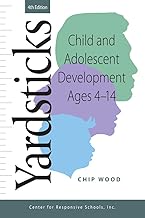
Yardsticks offers a practical framework for assessing development across childhood and adolescence. Chip Woods emphasizes milestones, measurement, and observation to track progress over time. The book blends theoretical concepts with user-friendly assessment tools, helping educators and parents recognize typical ranges of development while identifying areas that may require additional support. It is particularly useful for planning observations, setting expectations, and guiding conversations with families about growth.
What If Everybody Understood Child Development?: Straight Talk About Bettering Education and Children′s Lives

Rae Pica explores practical implications of child development research for education and parenting. The book translates scientific findings into accessible guidance for improving learning environments, instructional methods, and daily interactions with children. It addresses policy, classroom practices, and family routines, encouraging readers to consider how understanding developmental processes can lead to more equitable and effective outcomes for diverse learners.
A Moving Child Is a Learning Child: How the Body Teaches the Brain to Think

Gill Connell and Cheryl McCarthy present a distinctly body-centered view of development, proposing that movement and physical engagement are fundamental to cognitive growth. The text examines how the body experiences, processes, and internalizes learning from birth through early childhood. Readers will find practical activities that incorporate movement to support thinking, memory, attention, and problem-solving. The approach emphasizes kinesthetic learning and the interplay between motor development and brain organization.
Buying Guide: Key Purchase Considerations
Selecting the right child development text depends on goals, audience, and instructional context. Consider the following:
- Audience and purpose: Is the book for future teachers, current educators, parents, or students new to psychology?
- Scope and depth: Do you need a broad overview or a focused treatment of specific topics like social-emotional learning or neuroscience?
- Theoretical orientation: Are you seeking behaviorist, constructivist, or biopsychosocial perspectives?
- Practical tools: Look for chapters with classroom activities, assessment checklists, and discussion prompts.
- Accessibility: Clear writing, case examples, and visual aids can enhance comprehension for diverse readers.
- Up-to-date research: Some titles emphasize foundational theory, while others reflect recent findings in brain development and education.
When comparing these titles, assess how each handles milestones, variability in development, and the transfer from theory to practice. Readers should balance foundational concepts with actionable guidance to support learners across contexts. A mix of theoretical and applied resources can offer a well-rounded understanding suitable for both coursework and real-world application.