Starting with accounting can seem daunting, but the right beginner books simplify core concepts like financial statements, cost behavior, and managerial decisions. This article highlights five highly regarded titles that cover essential topics, from basic bookkeeping to practical business applications. Each section explains what makes the book accessible for newcomers and how it supports foundational skills for students, entrepreneurs, and professionals.
Summary of selected products:
| Book | Author/Brand | Format | Why It Shines For Beginners |
|---|---|---|---|
| Accounting for Beginners (All-in-One) | Finance Knights Publications | Paperback/Print | Comprehensive coverage of financial and managerial accounting with practical examples. |
| Accounting All-in-One For Dummies | Taillard, Kraynak, Boyd | Paperback | Beginner-friendly, structured lessons with videos and quizzes online. |
| Accounting Made Simple | Mike Piper | Paperback | Concise, 100-page overview of key concepts and financial statements. |
| Accounting QuickStart Guide | Josh Bauerle | Paperback | Clear steps for students and business owners to apply basics quickly. |
| Accounting for Non-Accountants | Wayne Label | Paperback | Plain language introduction tailored for entrepreneurs and small businesses. |
Best Overall For Beginners: Accounting For Beginners (All-in-One)
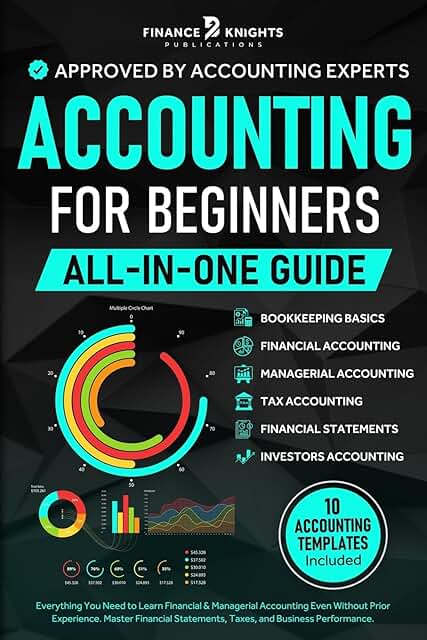
This All-in-One guide from Finance Knights Publications covers both financial and managerial accounting in an approachable format. It is designed for readers with no prior experience, emphasizing how to read financial statements, interpret tax considerations, and evaluate business performance. The book integrates practical examples and straightforward explanations to build confidence in core accounting tasks, making it a strong foundation for college coursework or self-study.
Best For Structured Learning: Accounting All-in-One For Dummies

This edition provides a comprehensive, beginner-friendly curriculum with additional online resources including videos and quizzes. Authored by a team of experts, the book breaks down fundamental topics into digestible sections, making it ideal for self-paced study or classroom use. The practical emphasis on everyday business scenarios helps readers connect theory with real-world applications.
Best Short Overview: Accounting Made Simple

Mike Piper’s concise guide distills accounting into a 100-page overview, covering essential topics such as the accounting cycle, financial statements, and basic analysis. The compact format makes it suitable for quick study sessions or as a refresher for those returning to accounting after a gap. It emphasizes clarity and practical takeaways over dense theory.
Best For Hands-On Practice: Accounting QuickStart Guide

Josh Bauerle’s QuickStart Guide targets beginners who want actionable steps to manage financial and managerial accounting tasks. The book presents practical workflows, simple exercises, and examples relevant to students and small business owners. It is particularly helpful for learners who benefit from step-by-step implementation and real-world context.
Best For Entrepreneurs: Accounting for Non-Accountants

Wayne Label’s guide speaks directly to entrepreneurs and small business owners who need a straightforward introduction to financial accounting without heavy jargon. It focuses on essential concepts, decision-making uses of accounting data, and practical examples that help readers apply what they learn to their own ventures.
Buying Guide: Key Purchase Considerations
- Audience fit: Choose a book aligned with your current knowledge level and goals—academic study, business management, or practical daily use.
- Depth vs. brevity: If you prefer concise overviews, pick a short guide; for comprehensive coverage, select an all-in-one or multi-topic text.
- Learning format: Consider whether online videos, quizzes, or exercises are important to your learning style.
- Real-world focus: Books aimed at entrepreneurs and small business owners can help bridge theory with practice.
- Clarity and pace: Look for plain language, clear examples, and a logical progression from basics to more advanced topics.
- Supplemental resources: Some titles offer online access to additional content, which can enhance study consistency.
- Update currency: Accounting standards evolve; prefer titles that are relatively current or explicitly note updates.
Across these selections, readers gain a practical grasp of how accounting informs business decisions, budgeting, and performance evaluation. The mix of beginner-friendly explanations and real-world applications supports steady progress from foundational concepts to more confident practice.