Discover a curated selection of bilingual French–English books that suit learners and curious readers alike. From classic children’s tales to dual-language anthologies, these titles blend accessible English with authentic French, helping readers compare texts side by side, build vocabulary, and enjoy timeless stories. Below, five standout options are highlighted with key features to help you choose the right fit for your goals, whether you’re practicing grammar, expanding comprehension, or exploring literary culture.
| Product | Language Focus | Ideal For |
|---|---|---|
| The Little Prince: A French/English Bilingual Reader | French and English text, parallel edition | |
| French Stories / Contes Français (A Dual-Language Book) | Short stories in both languages | Short reading practice, cultural snippets, translation practice |
| The Cat in the Hat in English and French | Young readers, bilingual picture book | Early learners, children, fun language exposure |
| Easy Learn French for Adult Beginners in Just 30 Days | Practical phrases, grammar and verbs | Adult learners seeking fast foundational skills |
| Great French Short Stories of the Twentieth Century | Dual-language short stories | Intermediate readers, literary exploration |
This article provides objective insights into each title, focusing on format, language balance, and suitability for different learning stages. A Buying Guide at the end helps compare options side by side and tailor choices to personal preferences, such as age, reading level, and interest in literature or practical language use.
The Little Prince: A French/English Bilingual Reader

The Little Prince bilingual reader presents Antoine de Saint-Exupéry’s beloved novella in a parallel English–French format, allowing readers to compare sentences and phrases directly. The edition typically emphasizes clear alignment between the two languages, making it a practical choice for learners transitioning from word-by-word translations to fluid reading. The classic story’s themes of imagination, responsibility, and wonder are accessible to a broad audience, including students and adults revisiting a childhood favorite. The format supports vocabulary building and comprehension with contextual cues drawn from the narrative and illustrations.
Key features include bilingual text pairing and concise, approachable language that preserves literary nuance. This edition is suitable for readers who want a steady pace of exposure to both languages without overwhelming complexity. The presence of familiar plot points helps sustain motivation while reinforcing grammar and syntax awareness. Readers can engage actively by marking cognates, noting differences in idioms, and reading passages aloud to practice pronunciation.
French Stories / Contes Français (A Dual-Language Book)

This Dover dual-language collection compiles French short stories and tales alongside English translations, providing compact reading pieces ideal for daily practice. Stories span various eras and styles, offering cultural context and vocabulary across different registers. The balance of languages enables cross-checking meaning and structure, which is especially helpful for intermediate learners who want to deepen reading fluency while retaining a strong focus on comprehension.
Readers benefit from the economy of each piece—short enough to finish in one sitting, yet rich enough to spark discussion and vocabulary discovery. Grammar notes and translator’s guidance are often ancillary but useful for learners who want to compare sentence construction and idiomatic usage in both languages. The anthology format also makes it easy to dip in and out when time is limited.
The Cat in the Hat in English and French
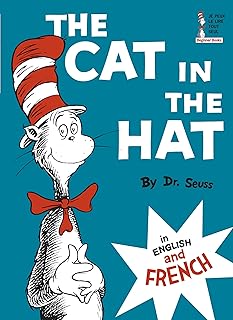
This bilingual picture book pairs Dr. Seuss’s playful rhythm with straightforward bilingual alignment. It translates The Cat in the Hat into French while preserving the whimsical whimsy of the original, making it accessible for children and adults alike who are building foundational language skills. The cadence and humor—paired with visual cues—support decoding and pronunciation practice, especially for early readers and language learners who respond well to repetitive patterns and rhyme.
Features often include side-by-side text with generous illustration-driven context, which aids in guessing meaning from imagery and tone. The bilingual format helps learners compare sentence structure and verb usage in a light-hearted setting. This edition is particularly effective for building confidence in reading aloud and for classroom use where pairing languages can reinforce memory and engagement.
Easy Learn French for Adult Beginners in Just 30 Days

This user-friendly guide targets adult beginners with a structured 30-day plan designed to cover essential grammar, verbs, and practical vocabulary. The book emphasizes daily 15-minute lessons and hundreds of exercises to reinforce learning. While not a traditional bilingual edition in the sense of parallel text, it provides foundational French with clear explanations and examples that readers can compare to their English intuition. This makes it a strong option for self-study, tutoring supplements, or classroom warm-ups when the goal is rapid acquisition of functional language.
Pros include a focused progression, digestible micro-lessons, and plenty of exercises to track improvement. Potential considerations involve the book’s emphasis on practical usage over literary nuance, which may guide readers toward additional authentic reading material once foundational competence is established. As a structured course, it works well for learners who prefer a concrete timeline and measurable milestones.
Great French Short Stories of the Twentieth Century

This Dover dual-language edition collects influential French short stories from the twentieth century with English translations. The curated selection provides exposure to classic authors and stylistic breadth—from realism to modernist innovations—within a bilingual framework. Readers can compare original passages with translations, exploring stylistic choices, tone, and cultural references. The format supports deeper literary study, critical reading, and vocabulary expansion across varied registers, including colloquial speech and formal narration.
Key advantages include authentic language exposure and scholarly translator notes that illuminate nuance without overwhelming the reader. The collection is well-suited for intermediate readers who want to challenge themselves with richer prose while maintaining a safety net through parallel text. It also serves as a valuable cultural repository for those studying French literature or preparing for higher-level language exams.
Buying Guide: Key Purchase Considerations And Comparisons
Selecting the right bilingual French–English book depends on your current level, goals, and preferred learning style. Consider these factors:
- Reading level and language balance: Parallel-text editions provide direct sentence-by-sentence alignment, while some titles lean more on translations with simpler original text. Choose based on your comfort with complex grammar and vocabulary.
- Format and layout: For beginners, picture books and short stories with clear illustrations can accelerate comprehension. For intermediate learners, longer narratives and literary anthologies offer richer language exposure.
- Learning objectives: If your aim is daily practical use, grammar-focused or phrase-based guides may be ideal. If your goal is cultural literacy and literature, dual-language classics are a better fit.
- Age appropriateness: Some titles target children or young readers, which can be appealing for visual learners or those seeking light, engaging content.
- Supplementary resources: Look for editions with notes, glossaries, or translator comments to deepen understanding of nuanced phrases and idioms.
How to use bilingual books effectively:
- Read a page in one language, then the corresponding page in the other to reinforce comprehension.
- Mark unfamiliar vocabulary and review it in context with examples from the text.
- Practice pronunciation aloud by following the rhythm and cadence of the original passages.
- For literary works, compare stylistic elements and discuss how tone and voice translate across languages.
In summary, the five titles highlighted here offer varied approaches to bilingual French–English reading. Depending on whether you value classic literature, quick practical learning, or beginner-friendly formats, there is a suitable option to support consistent practice, vocabulary growth, and a richer understanding of both languages.