Finding quality Sunday school books for children ages 4–12 helps teachers craft engaging lessons, reinforce biblical truths, and foster a lifelong interest in faith. The following selections cover a range of formats—from lesson plans and activity books to devotional series—designed to support classrooms with diverse ages and learning styles. Each option includes practical activities, discussion prompts, and age-appropriate scripture references to enhance weekly sessions.
| Product | Audience | Format | Why It Stands Out |
|---|---|---|---|
| 52 Sunday School Lessons for Kids | 6–12 | Lesson plans | Detailed plan-by-plan structure with engaging prompts |
| All-in-One Sunday School for Ages 4-12 (Vol 1) | 4–12 | Unified classroom resources | Works across mixed-age groups in one classroom |
| Systematic Theology for Kids | Family & classroom | Devotional & lessons | Doctrine-based, interactive learning |
| 77 Bible Activities for Kids | 5–8 | Activity book | Hands-on, creative Bible-based tasks |
| Top 50 Instant Bible Lessons for Elementary | Elementary | Lesson snippets | Quick, ready-to-use object lessons |
52 Sunday School Lessons for Kids
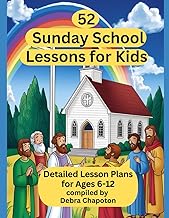
Author Debra Chapoton presents a library of 52 detailed lesson plans designed for children ages 6–12. Each session includes objectives, scripture references, activities, discussion prompts, and review ideas to reinforce the biblical message. The lessons are structured to fit a standard Sunday school period and are adaptable for varying class sizes. The straightforward format supports teachers seeking a reliable, ready-to-use curriculum with thoughtful engagement cues for kids.
All-in-One Sunday School for Ages 4-12 (Volume 1)

Volume 1 offers a consolidated resource for mixed-age classrooms, aligning activities and lessons across ages 4–12. Authored by Lois Keffer and Group Publishing, this volume emphasizes cohesive themes while providing adaptable activities, crafts, and discussion points suitable for an integrated church setting. The approach is particularly helpful for churches that combine multiple age groups into a single teaching time, ensuring content remains relevant and engaging for younger and older learners alike.
Systematic Theology for Kids

Designed as a family devotional, this book teaches scripture, doctrines, and faith through interactive Bible lessons, gospel verses, puzzles, and prayers. The systematic approach helps children understand core theological ideas in an age-appropriate way, with activities that encourage family discussion and reflection. It serves as a bridge between classroom learning and home study, reinforcing concepts through repeated exposure and practical application.
77 Bible Activities for Kids

Christian Art Kids presents 77 activities designed for children ages 5–8. The activities blend art, craft, science, and memory work with biblical themes, promoting hands-on learning and creativity. Each activity aims to deepen understanding of scripture while keeping students engaged through varied modalities, aiding recall and practical application in everyday life.
Top 50 Instant Bible Lessons for Elementary

Lindsey Whitney offers a collection of quick, ready-to-use object lessons for elementary students. Each lesson is designed for efficiency in the classroom while delivering clear biblical truths. This resource is ideal for teachers who need a fast-start option for Sundays with limited prep time, yet still require meaningful interaction and memorable takeaways for students aged around elementary school.
Buying Guide
When selecting children Sunday school books, consider the following factors to match classroom needs and learning styles:
- Age range and classroom structure: Choose materials that clearly state the target ages and whether they work in mixed-age groups or single-age settings. For churches with one-room classrooms, all-in-one resources can simplify planning.
- Curriculum depth and doctrine: Decide whether you want story-driven lessons, doctrinally focused material, or devotional concepts suitable for family use. Consider how the content aligns with your church’s teaching philosophy.
- Engagement methods: Look for resources offering a mix of activities—storytelling, crafts, memory work, discussion questions, and interactive games—to accommodate different learning styles and keep attention high.
- Prep time and resources: Some books are plug-and-play, while others require additional craft supplies or space. Evaluate the average prep time against weekly planning bandwidth.
- Home integration: Materials that include parent prompts or family devotional ideas help extend learning beyond the classroom and reinforce lessons at home.
- Assessment and continuity: Consider whether the resource provides clear objectives, review questions, and a plan for progression across weeks or units.
- Visual and accessibility features: Images, large print options, and high-contrast designs can aid younger readers or learners with visual needs.
In practice, a combination approach often works best: a core set of structured lessons for reliability, complemented by activity-focused books to boost engagement and creativity. For teachers managing mixed-age groups, resources that unify themes across ages tend to reduce planning complexity while maintaining relevance for all students. Finally, verify that materials align with your denomination’s scripture translation and doctrinal position to ensure consistency with your teaching environment.