Explore essential books that trace the Vikings’ journeys, battles, and cultural impact. This guide highlights five highly regarded works, drawing from scholarly research and accessible storytelling to satisfy both casual readers and history enthusiasts.
| Book Title | Author / Editor | Format |
|---|---|---|
| Children of Ash and Elm: A History of the Vikings | Valentin | Paperback / Kindle |
| Uncovering Vikings History: A Guide Into Vikings’ Exploration, Culture, Historic Battles and Their Legendary Warriors | Lucas Russo | Paperback |
| The Sea Wolves: A History of the Vikings | Lars Brownworth | Paperback |
| The Wolf Age: The Vikings, the Anglo-Saxons and the Battle for the North Sea Empire | Tore Skeie, Alison McCullough (Translator) | Paperback |
| The Oxford Illustrated History of the Vikings | Peter Sawyer (Editor) | Hardcover |
Children of Ash and Elm: A History of the Vikings

Valuable for its balanced narrative, this book blends archaeological findings, sagas, and modern scholarship to chart Viking origins, expansion, and everyday life. It emphasizes political structures, trade networks, and cultural exchanges that defined Viking society across the North Sea and beyond. Readers gain a nuanced view of raiding myths versus economic motivations, and the enduring legacies of Norse culture in today’s world.
Uncovering Vikings History: A Guide Into Vikings’ Exploration, Culture, Historic Battles and Their Legendary Warriors

This guide-like volume explores Viking exploration, daily life, and legendary battles. It presents a concise overview of key figures, navigational feats, and cultural influences that shaped medieval Europe. While accessible to general readers, it also references primary sources and archaeological evidence to help readers assess the Viking era with clarity and context.
The Sea Wolves: A History of the Vikings
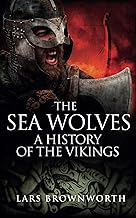
Brownworth’s narrative emphasizes the Viking Age’s maritime dimension, detailing shipbuilding, coastal raids, and the integration of Norse culture with European realms. The book connects Viking sea power to political ambitions and trade networks, yielding a vivid, plot-driven historical account suitable for readers seeking a story-driven yet well-researched history.
The Wolf Age: The Vikings, the Anglo-Saxons and the Battle for the North Sea Empire

This translation-supported edition examines the intertwined destinies of Vikings and Anglo-Saxons as they contend for control of the North Sea Empire. It highlights political intrigues, military campaigns, and the shifting power dynamics that defined northern Europe during this era. Readers will encounter multiple perspectives on leadership, legitimacy, and cultural drift that accompanied Viking expansion.
The Oxford Illustrated History of the Vikings

Edited by Peter Sawyer, this compilation blends scholarly essays with visual materials to present a comprehensive overview of Viking history. The volume covers origins, expansion, settlement, culture, and legacies, offering multiple scholarly viewpoints. This book is well-suited for readers seeking a structured, classroom-grade synthesis with rich illustrations to complement the text.
Buying Guide: Viking History Books
- Scope and depth: Decide whether you want a broad introduction or a detailed, source-based study. General histories suit casual readers; academic volumes suit researchers and students.
- Scope of coverage: Some works emphasize seafaring and raids, while others focus on political structures, daily life, or cultural exchanges. Choose based on your interest in trade, warfare, or social history.
- Perspective and tone: Narrative-driven histories provide engaging storytelling; scholarly volumes emphasize primary sources and interpretation. Cross-check notes and references to gauge academic rigor.
- Illustrations and maps: Visuals aid comprehension of routes, settlements, and artifacts. The Oxford Illustrated History offers strong visual context; others may focus more on textual analysis.
- Accessibility vs. depth: If you’re new to the topic, start with broader, well-reviewed introductions. For deeper study, select titles with extensive bibliographies and citations.
In selecting these five titles, the aim is to present varied approaches to Viking history—from narrative histories and travel through waterways to illustrated editors’ surveys—so readers can compare interpretations, sources, and emphases across generations of scholarship.