Piano technique is a cornerstone of expressive, fluent playing. This article highlights five highly regarded books that cover fundamentals, advanced strategies, and practical exercises. Readers will find clear instruction on touch, tone, rhythm, and efficient practice habits. Each title is linked to an Amazon product page for convenient reference while keeping the focus on proven approaches that suit both beginners and seasoned players looking to refine technique.
| Book | Author / Editor | Key Focus |
|---|---|---|
| Piano Technique (Dover Books On Music: Piano) | Walter Gieseking, Karl Leimer | Foundational techniques, touch development, practical exercises |
| Czerny – Practical Method for Beginners On Pianoforte, Op. 599 | Giuseppe Buonamici (Editor), Carl Czerny (Composer) | Beginner technique, scales, exercises, progressive development |
| The Stress-Free Piano Method for Late Starters | Tom Harris | Beginner-friendly 3-in-1 approach: basics, chords, exercises |
| The Complete Piano Technique Book | Jennifer Castellano, Joseph Alexander, Tim Pettingale (Editors) | Comprehensive technique repertoire and exercises |
| The Leschetizky Method | Malwine Brée | Fine, corrected piano playing and nuanced touch |
Explore each title below to understand how it can fit different playing situations—from initial hand coordination to refined tonal control. The sections provide a concise overview, representative features, and how the book supports steady progress over time. Whether preparing for an audition, recital, or personal growth, these resources offer practical guidance grounded in classical technique traditions.
Piano Technique (Dover Books On Music: Piano)

This volume presents Walter Gieseking and Karl Leimer’s collaborative approach to piano technique, emphasizing efficient movement, relaxation, and musical phrasing. The book blends practical exercises with commentary on touch, fingering, and pedaling. Readers often cite its clear instructions for achieving a singing tone across scales, arpeggios, and musical passages. The concise format supports focused practice sessions and progressive mastery over time.
- Clear, approachable explanations for touch and finger independence
- Practical exercises aligned with standard repertoire
- Progressive structure suitable for both beginners and intermediate players
Czerny – Practical Method for Beginners On Pianoforte, Op. 599
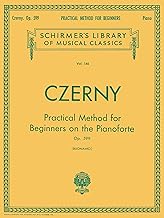
Connected to Carl Czerny’s long-standing tradition of beginner-friendly technique, this edition presents Op. 599 as a structured pathway into piano mechanics. Edited by Giuseppe Buonamici, the collection emphasizes scales, coordination, and repetitive drills designed to reinforce consistent finger motion and rhythm. The exercises are organized to build confidence for early-stage players while introducing musical expression through phrasing and tempo control.
- Progressive exercises tailored for beginners
- Focus on scales, arpeggios, and fingering patterns
- Historical context within the Czerny pedagogical lineage
The Stress-Free Piano Method for Late Starters

A practical approach for late-start players, this book combines basics, chords, and exercises with a modern mindset for reduced tension and increased enjoyment. The method emphasizes manageable daily routines and short practice blocks designed to yield tangible results in a relatively short time. It’s especially useful for adults returning to playing or complete beginners seeking a gentle, structured entry into keyboard technique.
- Beginner-friendly language and approachable exercises
- Chords and foundational theory integrated with technique
- Time-efficient practice plans suitable for busy schedules
The Complete Piano Technique Book

This comprehensive reference compiles a broad set of exercises and guidance from multiple contributors, offering a structured route through keyboard technique. It covers posture, hand position, finger independence, and tonal control across scales, arpeggios, and repertoire excerpts. The collaboration-style format helps learners compare approaches and discover practical methods that suit their individual strengths and challenges.
- Extensive exercise sets for diverse skill levels
- Clear emphasis on posture, relaxation, and alignment
- Multi-author perspectives provide broad technique insight
The Leschetizky Method: A Guide to Fine and Correct Piano Playing

Malwine Brée’s edition revisits the Leschetizky approach, renowned for its emphasis on nuanced touch, precise finger control, and musical poise. This work translates historical principles into accessible guidance for contemporary players, with practical exercises and interpretive notes that help cultivate a refined, expressive piano technique. The method remains a resource for developing a connected, singing line across repertoire.
- Focus on touch precision and musical line
- Historical technique adapted for modern practice
- Detailed exercises aimed at phrasing and control
Buying Guide: Key Purchase Considerations For Piano Technique Books
Choosing the right piano technique book depends on your current level, goals, and preferred learning style. Consider these perspectives to guide your decision:
- Beginner-friendly structure: Look for titles that start with foundational concepts, clear finger patterns, and progressive difficulty. Books like Czerny Op. 599 and the Stress-Free methods are often strong starting points.
- Technique vs. musicality balance: Some works emphasize technical drills, while others integrate musical phrasing and tone. If you want both, choose titles that pair technique with repertoire excerpts and expressive guidance.
- Approachability and pacing: For self-guided practice, select books with concise explanations and well-ordered exercises. For classroom use, consider multi-author compilations offering varied perspectives.
- Historical methods with modern relevance: Classic methods—such as Leschetizky—offer deep tonal and touch insights, while modern manuals provide practical, time-efficient routines.
- Supplementary materials: Some editions include diagrams, illustrations, or companion online resources. Evaluate whether these add value for your practice plan and schedule.
In practice, a combination approach often yields the best results: begin with a solid technique foundation, then apply that technique across scales and repertoire to build musical fluency. Regular, focused practice using the selected titles can support measurable progress in tone, speed, and accuracy over weeks and months.