For professionals and students who prefer starting their week on Sunday, finding a planner that aligns with this cadence can boost consistency and focus. This guide highlights top planners that begin on Sunday, drawing from options designed to support task management, habit tracking, and long-range planning. Each choice offers a distinct layout—weekly dashboards, hourly blocks, or undated pages—so you can pick the format that best fits your workflow and personal rhythm.
| Product | Brand | Key Benefit |
|---|---|---|
| Sunday Start Weekly Planner with Habit Tracker | ZERONE CENTRE Store | Weekly dashboard with 6 focus areas and a daily tracker for habits and tasks |
| Notsu Weekly Planner Notepad | Notsu Store | Elegant, compact, tear-off weekly pages for at-a-glance planning |
| Planner 2026-2027, 18 Months Weekly & Monthly | Unspecified | Long-range planning with monthly tabs and two-year scope |
| POPRUN 2026 Weekly Planner | POPRUN Store | Two pages per week with 30-minute time slots for detailed scheduling |
| 2026 Weekly Appointment Book | Poluma Store | 15-minute increments in a compact, durable weekly layout |
Sunday Start Weekly Planner With Habit Tracker
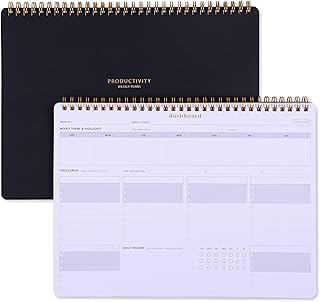
The Sunday Start Weekly Planner with Habit Tracker is designed for professionals who manage multiple teams or projects. It features a weekly dashboard with six focus areas to outline objectives, projects, clients, budgets, meals, or shopping lists for the week. An integrated action plan appears as a to-do list to keep tasks organized, while a large spiral calendar includes a daily tracker, weekly theme, and highlights section for at-a-glance planning. A top priority system and a habit-tracking module help sustain momentum through the week.
Key aspects include a clear weekly view that minimizes context switching and a dedicated space for priorities, allowing users to chart progress across projects. The planner’s layout supports project managers, freelancers, teachers, and students who need a professional tool to map daily steps to long-term goals. Its durable format is suited for desk use, with an emphasis on action-oriented planning rather than simply listing events.
Notsu Weekly Planner Notepad

The Notsu Weekly Planner Notepad offers an elegant, modern design with clean lines and rounded corners, designed to blend with contemporary office spaces. It uses an undated weekly format that presents the entire week at a glance, enabling users to plan and refocus quickly. The physical act of writing helps reinforce commitments and prioritization, making it a practical choice for individuals who value tactile planning. The tear-off format allows you to remove completed weeks and keep a tidy workspace.
With its durable bindings and accessible layout, this planner supports professionals who prefer a lighter, portable planning solution. While it centers on weekly clarity, it also gives space to reflect on goals and carry over priorities to the next week. This makes it suitable for students and office workers seeking a simple, stylish tool to maintain focus without overwhelming complexity.
Planner 2026-2027, 18 Months Weekly & Monthly

This hardcover planner covers January 2026 through June 2027, offering an expansive 18-month planning horizon. It combines monthly and weekly spreads with 18 monthly tabs for quick navigation, plus yearly goals, reference calendars, and a holiday list. The large 8.5″ x 11″ format provides ample writing space, making it ideal for detailed scheduling, project planning, and long-term goal tracking. The design emphasizes minimalism while preserving practical features for teachers, students, and professionals.
The planner supports users who want a cohesive system for aligning daily tasks with longer-term objectives. Its durability and thoughtful layout help keep weekly and monthly goals in view, while the included goal-setting pages encourage proactive planning. This option is well-suited to users who value a blend of structure and flexibility across an extended period.
POPRUN 2026 Weekly Planner

The POPRUN 2026 Weekly Planner uses a two-pages-per-week layout with 30-minute time slots from 7:00 a.m. to 9:30 p.m. This vertical format provides granular scheduling alongside monthly overviews, helping users allocate time efficiently and track priorities across the week. It includes a TODAY ruler, tear-off corners, and month tabs to speed date localization, plus a foldable pocket and a pen holder for practical on-the-go use.
Suitable for students and professionals who need precise time-blocking, this planner makes it easier to adhere to a structured daily routine. The compact 7″ x 8.5″ size remains portable while still delivering substantial writing space. The elastic closure and built-in pocket contribute to a durable solution for busy schedules and frequent transitions between environments.
2026 Weekly Appointment Book

The 2026 Weekly Appointment Book offers a daily/hourly planning framework with 15-minute increments, spanning January through December 2026. It features a soft PU leather cover for a professional feel and wire-binding to keep pages secure for long-term use. Each week presents a top goals section, a weekly to-do list, and a review area to reflect on progress. The planner starts each week on Monday, but the weekly layout accommodates Sunday-start preference through its flexible design and clear hourly blocks.
Ideal for professionals who schedule appointments, medical office staff, teachers, and students, this planner emphasizes precise time management and routine evaluation. The durable wire-bound construction supports heavy use, while the soft cover keeps the planner comfortable to carry. The layout’s focus on short time slots invites careful consideration of how every half-hour contributes toward weekly objectives and personal routines.
Buying Guide
- Start day alignment: Choose planners specifically designed to begin on Sunday if that cadence enhances your weekly planning and routine consistency. Look for weekly dashboards or calendar spreads labeled for Sunday-start planning.
- Layout balance: Decide between time-blocking (hourly slots) and high-level planning (to-do lists and themes). Time-blocking suits detailed daily schedules; thematic dashboards support goal tracking across projects.
- Durability and portability: Consider binding type (spiral vs. hardcover), cover material, and size. A larger format offers writing space, while a compact one is easier to carry between home and office or campus.
- Habit and goal features: Planners with habit trackers or goals pages help connect daily actions to longer-term outcomes. Check if the planner includes weekly reviews or goal-tracking sections.
- Undated vs. dated: Undated layouts offer flexibility for irregular schedules; dated formats support consistent weekly rhythm and easier progress tracking. Consider your need for reminders and anniversaries.
- Theme clarity: Look for clearly labeled sections (Top Priorities, Focus Areas, Highlights) that reduce decision fatigue and streamline weekly decisions.
- Accessories: Bonus features such as pocket folders, pen holders, elastic closures, and monthly tabs can enhance usability and organization over a full year or longer.
- Target audience: Some planners emphasize professional productivity (project managers, freelancers) while others suit students or educators. Match features to your typical week and goals.