Growing fluency in Chinese starts with the right study materials. This guide highlights five well-regarded books that cover fundamentals, character learning, conversational practice, and cultural context. Each pick is designed to support learners at different stages—from beginner to intermediate—while offering practical exercises, audio resources, and clear explanations to boost retention and speaking confidence.
| Product | Author/Brand |
|---|---|
| Learn Mandarin Chinese for Adult Beginners: 7 Books in 1: Speak Mandarin Chinese In 30 Days! | Explore ToWin (Author) |
| Reading and Writing Chinese: Third Edition, HSK All Levels | William McNaughton, Jiageng Fan |
| HSK 1 Chinese Characters Workbook for Beginners – Volume 1 | Shu Ping (Author) |
| Chinese Stories for Language Learners: Elementary | Ling Ling, Xinrong Huo (Editor) |
| Chinese for Beginners: Learning Conversational Chinese | Yi Ren, Xiyuan Liang |
Learn Mandarin Chinese for Adult Beginners: 7 Books in 1

This multi-volume guide targets adult beginners who want a structured, compact path from pronunciation to everyday speaking. The book consolidates seven modules into one accessible package, offering stepwise instruction, practical dialogues, and daily language tasks. Expect a focus on pronunciation, basic grammar, essential vocabulary, and quick speaking drills designed to build confidence for real-world interactions. The included dialogue exercises emphasize common scenarios like greetings, shopping, and asking for directions, enabling learners to practice speaking early in the process.
Key features include a beginner-friendly progression, clear pinyin and tone guides, and practical examples that help solidify memory through repetitive, useful phrases. The material is organized to support consistent practice, with bite-sized lessons that fit into busy schedules. For learners seeking a flexible, all-in-one starter kit, this title offers breadth and structure, with an emphasis on usable, spoken Chinese rather than abstract rules.
Reading and Writing Chinese: Third Edition

Designed for learners aiming to master both reading and writing, this edition covers a broad range of characters, strokes, and meanings. The text pairs character forms with pinyin guidance, making it a strong companion for building literacy from the ground up. With thousands of characters and compounds included, students gain exposure to high-frequency vocabulary alongside essential writing conventions. The approach is methodical: introduce characters in a logical order, reinforce through reading passages, and reinforce recall with writing practice and exercises that emphasize correct stroke order and character structure.
For those pursuing HSK preparation or general literacy, the book offers a systematic path from recognition to composition. It balances character knowledge with reading comprehension, enabling learners to decode sentences and understand context. The edition’s breadth supports long-term retention, as readers repeatedly encounter characters across varied compounds and phrases, gradually constructing fluency in both reading and writing skills.
HSK 1 Chinese Characters Workbook for Beginners

This workbook focuses on foundational character learning for beginners. It introduces new characters with pinyin, stroke order guidance, and practice opportunities, plus examples of usage in common phrases and daily dialogues. The structure supports incremental mastery: learners build recognition, then connect characters to spoken language through practical sentences and contextualized examples. The volume’s emphasis on stroke order helps develop proper writing habits early, which in turn reinforces memory and accuracy as new characters are introduced.
Ideal for students who want a clear, repeatable routine, this workbook pairs visual character cues with meaningful language, supporting steady progress toward reading simple texts and composing short dialogues. The workbook format makes it easy to track progress and revisit troublesome characters as needed, helping learners feel a steady sense of achievement with each milestone completed.
Chinese Stories for Language Learners: Elementary
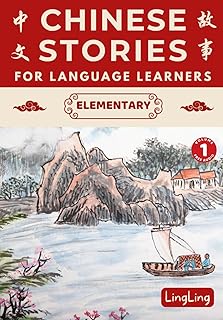
This bilingual collection presents folktales, idioms, fables, proverbs, myths, and modern short stories designed to boost comprehension while keeping the content engaging. The bilingual format enables learners to compare Chinese text with English translations, fostering vocabulary acquisition and cultural understanding. The stories are carefully chosen to expose readers to natural sentence structures and a range of idiomatic expressions, helping learners develop a feel for rhythm, tone, and discourse markers common in everyday Chinese conversation.
Audio availability enhances listening comprehension and pronunciation practice. By engaging with short, varied narratives, learners acquire context-rich language that supports long-term retention and confident reading. The combination of folklore, contemporary tales, and idioms makes this book a well-rounded resource for learners seeking cultural depth alongside core language skills.
Chinese for Beginners: Learning Conversational Chinese

This title emphasizes practical conversation, with fully romanized text and free online audio to support pronunciation and listening skills. It is designed for learners who want to initiate and sustain conversations quickly, covering everyday topics, common verbs, and essential sentence patterns. The romanization helps beginners navigate pronunciation before fully internalizing characters, while audio resources reinforce correct intonation and natural speech flow. The book blends grammar explanations with actionable dialogues so users can start speaking with confidence early in their studies.
From greetings to simple negotiations, the content centers on practical language use rather than purely theoretical rules. The combination of romanization, dialogues, and audio aids makes this a strong companion for self-study or classroom use, especially for learners who need a gentle, structured entry into spoken Chinese.
Buying Guide: Key Considerations for Selecting Chinese Language Books
- Learning goals: Decide whether you want foundational speaking, reading, writing, or a mix. Some titles emphasize character work, others prioritize daily conversation or storytelling.
- Audio resources: Look for accompanying audio to improve listening and pronunciation. Audio-enabled books typically accelerate speaking confidence and retention.
- Character approach: If writing and reading are priorities, choose books that integrate characters with stroke order and meaningful practice. For pure conversation, prioritize dialogue-focused titles.
- Level progression: Favor a progression from basic to advanced content, with clear milestones to measure progress. Avoid overload early on; gradual complexity supports long-term retention.
- Format and pace: Consider whether you prefer workbook-style practice, bilingual texts, or narrative stories. Bilingual formats can speed comprehension, while monolingual texts may strengthen immersion.
- Supplementary materials: Check for companion online resources, flashcards, or printable worksheets. These can extend study sessions and reinforce learning outside the book.
- Cultural context: Books that weave cultural notes, idioms, and real-world scenarios help learners use Chinese more naturally and confidently.
- HSK alignment: If you’re aiming for standardized testing, choose books aligned with HSK levels and provide targeted practice materials.
- Durability and accessibility: Consider print quality and availability. Ebook options can offer portability, while physical books can be easier for handwriting practice.
In selecting among these titles, learners should assess current proficiency, time commitment, and preferred learning style. A balanced approach often involves pairing a character-focused workbook with a conversational reader to cultivate both recognition and spoken fluency. For those seeking cultural texture, bilingual stories add depth without sacrificing language fundamentals. Ultimately, the right combination is the one that keeps you consistently practicing and progressing toward your personal language goals.