For readers seeking a practical, reliable foundation in survival skills, a well-chosen basic survival skills book can be a lifelong reference. This article highlights five comprehensive guides that cover core competencies—from shelter, signaling, and firecraft to navigation and long-term preparedness. Each title brings a distinct perspective, whether you’re new to wilderness skills or expanding an existing toolkit. Use this guide to compare approaches, methods, and emphasis, and choose the book that best fits your goals, climate, and level of detail you prefer.
| Title | Author/Editor |
|---|---|
| Back to Basics: A Complete Guide to Traditional Skills | Abigail Gehring (Editor) |
| SAS Survival Handbook, Third Edition | John ‘Lofty’ Wiseman (Author) |
| Bushcraft 101: A Field Guide to the Art of Wilderness Survival | Dave Canterbury (Author) |
| The WW3 Prepper’s Survival Bible | Bud R. Hoyles (Author) |
| The Bushcraft Boxed Set | Dave Canterbury (Author), Ph.D. Jason A. Hunt (Author) |
Back to Basics: A Complete Guide to Traditional Skills

Back to Basics provides a broad survey of traditional, time-tested skills that recur in many survival contexts. Edited by Abigail Gehring, the book curates practical chapters on tool use, food gathering, land navigation, foraging, and everyday outdoor crafts. The editor’s aim appears to be a portable reference that can be consulted in preparation or during field work. The content tends to favor clear, step-by-step instructions with illustrations or images to demonstrate technique. This title can serve as a dependable starting point for readers building a foundational survival library.
Key features include a wide range of traditional crafts, practical tips for maintaining gear, and concise explanations of survival principles. The balance between theoretical knowledge and hands-on practice is designed for both beginners and readers who want to refresh older skills. This volume’s breadth can help users form a structured learning plan, from basic fire-making to shelter construction and everyday improvisation using common materials.
SAS Survival Handbook, Third Edition

The SAS Survival Handbook is a renowned reference that emphasizes the practical application of survival theory. John ‘Lofty’ Wiseman, a former SAS member, compiles a comprehensive guide that covers a broad spectrum of scenarios—from wilderness trekking to urban emergencies. The book is organized to support readers in quickly finding actionable information, with clear sections on signaling, navigation, shelter, water procurement, fire-starting, food, and first aid. It is known for its thorough risk assessment, decision-making frameworks, and troubleshooting checklists that help readers adapt to changing conditions.
Pros include a systematic approach to planning and improvisation, a focus on realistic field scenarios, and robust safety considerations. The edition updates reflect advances in gear and field techniques, offering practical tests and drills. Potential readers should consider their preferred depth: this title is substantial and best-suited for those who want a detailed reference they can consult repeatedly during training or field expeditions.
Bushcraft 101: A Field Guide to the Art of Wilderness Survival

Bushcraft 101 focuses on practical, real-world wilderness living skills. Dave Canterbury shares techniques for building shelter, selecting and processing wild foods, and mastering critical tools and gear choices. The book blends field-tested methods with accessible explanations suited for hikers, campers, and aspiring bushcraft enthusiasts. It emphasizes low-impact living, sustainable practices, and resourceful problem-solving when confronted with adverse environments. The content structure supports both quick-reference use on trips and deeper study for readers expanding their skill set.
Readers can expect a hands-on approach and pragmatic examples that translate well to backyard practice and remote excursions alike. Canterbury’s experience informs actionable guidance on gear preparation, firecraft, and water purification, while also addressing safety considerations, risk assessment, and self-reliance. This title is well-suited for those seeking a practical, hobbyist-friendly introduction to bushcraft rooted in real-world fieldwork.
The WW3 Prepper’s Survival Bible
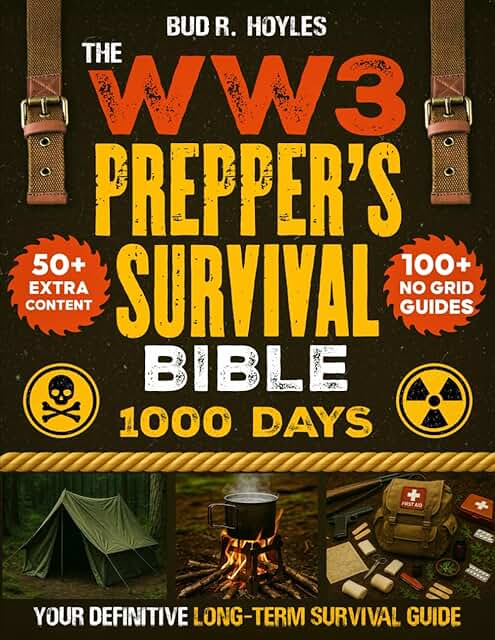
The WW3 Prepper’s Survival Bible presents a long-term, comprehensive approach to preparedness for grid-down scenarios. Bud R. Hoyles outlines a range of projects, including off-grid living, water filtration, medical readiness, bug-in plans, and homesteading fundamentals. The work integrates practical hardware recommendations with step-by-step procedures for sustaining a household during extended disruptions. It emphasizes planning, resource management, and self-reliance as core competencies for readers who want to build resilient routines and communities.
From a strategic angle, this title highlights the importance of redundancy, medical readiness, and modular systems that can be scaled according to need. It may appeal to readers who prefer a future-oriented, survivalist perspective with a focus on contingency planning. While highly actionable, it also invites readers to assess personal risk tolerance and environmental factors when tailoring strategies to their situation.
The Bushcraft Boxed Set

This boxed set combines several of Dave Canterbury’s core works, alongside additional titles by Ph.D. Jason A. Hunt, providing a curated collection for multi-volume learning. The series emphasizes practical, field-ready skills such as fire-making, shelter building, trapping, gathering, and cooking in the wild, as well as bushcraft-first aid. The boxed format makes it convenient for organized study or as a durable reference for weekend trips. The content tends to blend traditional skills with modern safety and resource management considerations, offering a cohesive path through basic to advanced concepts.
Because the set spans multiple books, readers gain a layered learning experience: foundational techniques in Bushcraft 101, followed by deeper dives in advanced topics and practical field guides. This progression can be especially beneficial for readers who prefer structured curricula and want a portable library that covers both theory and hands-on practice.
Buying Guide: Key Purchase Considerations
- Skill level and goals: Consider whether you are a beginner seeking broad coverage or an intermediate reader focusing on specific areas such as shelter, fire, or water purification.
- Scope and depth: Some titles are concise field guides; others provide extensive drills, checklists, and scenario planning. Match depth to your training plan and available study time.
- Organization and format: Look for clearly indexed chapters, illustrated steps, and quick-reference sections that you can use in the field. Visual aids can improve retention and execution under stress.
- Practicality and gear emphasis: If you own limited gear, prioritize books that teach universal techniques not tied to specialized equipment. If you anticipate long-term independence, seek resources with tools for self-sufficiency and off-grid living.
- Author credibility: Books by seasoned practitioners or recognized authorities often provide more reliable guidance. Consider editions updated to reflect current best practices and safety standards.
- Update frequency: Survival guidance evolves with gear and techniques. For ongoing learning, prefer titles with newer editions or companion resources that reflect modern field conditions.
- Learning format: Some readers prefer narrative guidance, others prefer checklists and step-by-step procedures. Choose a format that aligns with your learning style and retention goals.
- Price and coverage balance: While price is a consideration, prioritize value derived from comprehensive content, diagrams, and practical drills over cheap or flashy formats.
These sources collectively offer a spectrum of approaches to basic survival skills. Readers should evaluate which title or combination best aligns with their environment, training objectives, and preferred learning style. For long-term preparedness, integrating multiple volumes can provide both breadth and depth, supporting safe, informed decision-making when it matters most.