Parents and educators can help children build lasting confidence with engaging stories and practical exercises. The following five titles combine growth mindset concepts with age-appropriate activities to foster self-belief, resilience, and positive thinking. Each book offers relatable scenarios, interactive elements, and accessible language designed for readers from early elementary to pre-teen years.
Summary of Selected Products
| Product | Author/Brand | Link |
|---|---|---|
| You Are Awesome: An Uplifting and Interactive Growth Mindset Book for Kids and Teens | Matthew Syed (Author), Toby Triumph (Illustrator) | Amazon |
| The Girl Who Makes a Million Mistakes | Brenda Li (Author) | Amazon |
| Confidence is my Superpower: A Kid’s Book about Believing in Yourself | Alicia Ortego (Author) | Amazon |
| The Secret Playbook of Life: 50 Fun Stories to Teach Self-Confidence | Sophie Harbor (Author) | Amazon |
| Happy Confident Me: Daily JOURNAL | Nadim Saad, Annabel Rosenhead, Daniel Bobroff (Authors/Illustrator) | Amazon |
You Are Awesome: An Uplifting Growth Mindset Book

This title blends motivational messaging with interactive prompts that encourage kids to embrace a growth mindset. It emphasizes the power of deliberate practice, resilience, and choosing brave actions. Readers are guided to celebrate incremental progress and to reframe mistakes as opportunities to learn. The author team leverages relatable scenarios suited for middle school readers, offering practical steps to build confidence over time.
Key features include actionable exercises, kid-friendly language, and colorful illustrations that reinforce the central message: confidence grows through consistent effort and optimistic thinking. The book supports parents and teachers seeking a structured, engaging way to nurture self-belief in children stepping into adolescence.
The Girl Who Makes a Million Mistakes

Brenda Li’s story centers on resilience, self-validation, and a growth mindset in a relatable way for young readers. The narrative celebrates trial-and-error learning while highlighting why mistakes are valuable signals for growth. The book emphasizes self-esteem through perseverance, encouraging kids to keep trying after setbacks and to view challenges as stepping stones toward success.
Its approachable chapters and supportive messages help children translate cognitive strategies into everyday actions—planning, reflection, and seeking feedback. The gentle plot progression makes it suitable for classroom reading circles or family discussions about how to respond to mistakes with curiosity rather than self-criticism.
Confidence Is My Superpower

This title focuses on believing in oneself and developing healthy self-esteem through age-appropriate storytelling and activities. It presents practical strategies families can adopt, such as daily affirmations, goal setting, and recognizing personal strengths. The book emphasizes that confidence is a skill that grows with practice, not a fixed trait, making it suitable for younger readers who are building self-image in school and social settings.
Readers are guided to identify personal talents, set simple milestones, and celebrate small wins. The guidance promotes a growth-oriented mindset, encouraging kids to push beyond comfort zones with supportive language and visuals that reinforce self-worth.
The Secret Playbook of Life
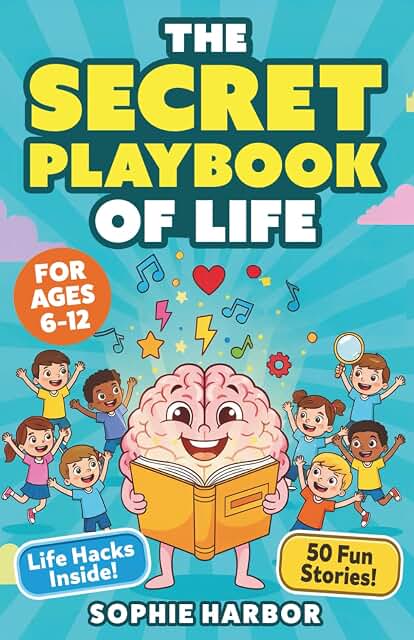
Designed as a collection of fifty stories, this book uses short narratives to teach self-confidence, friendship, and emotional skills, with readers exploring how to handle social dynamics and personal challenges. The stories are crafted to be digestible for late elementary and early middle school students, offering discussion prompts and reflective exercises that reinforce positive habits and considerate behavior.
The playbook format encourages interactive reading, inviting kids to apply lessons to real-life situations—whether it be standing up for themselves, trusting their instincts, or communicating effectively with peers. The content supports classroom activities focused on emotional literacy and social resilience.
Happy Confident Me: Daily Journal

This daily journal blends gratitude work with growth-mindset exercises to boost happiness and self-esteem. Structured prompts encourage children to identify what they’re grateful for, set achievable goals, and reflect on personal progress. The collaborative authorship combines perspectives from multiple creators, which can help appeal to a multicultural audience and provide varied strategies for building resilience.
The journal format supports consistent practice, a key element in reinforcing confidence-building habits. It can be used at home or in school settings to complement reading and discussion with reflective writing, helping kids articulate strengths, challenges, and next steps.
Buying Guide: Confidence-Building Books For Kids
When selecting books to foster confidence in children, consider the following factors:
- Age appropriateness: Look for language and concepts that align with the child’s developmental stage, whether early elementary, upper elementary, or middle school.
- Growth mindset focus: Prioritize titles that explicitly discuss effort, strategies, and learning from mistakes rather than fixed traits.
- Interactive elements: Choose books with prompts, activities, or reflective exercises that engage readers and support practical application.
- Emotional literacy: Books that address emotions, resilience, and social skills help children translate confidence into healthy interpersonal interactions.
- Parental and educator support: Some titles include discussion questions or guided activities—valuable for family reading time or classroom use.
- Diversity and inclusion: Select books featuring diverse characters and relatable scenarios to broaden perspectives and representation.
- Format variety: A mix of story-driven narratives, journals, and prompt-based books can appeal to different learning styles and sustain engagement.
Comparative perspectives:
- Story-driven growth mindset books are effective for modeling attitudes and behaviors in relatable contexts, helping children see strategies in action.
- Journal and activity-based formats can reinforce learning through consistent practice, making abstract concepts tangible and trackable.
- Books emphasizing social-emotional skills support not only self-confidence but also peer relationships and classroom dynamics.
Incorporating these titles into a reading plan can provide a well-rounded approach: one or two narrative books to set the tone, supplemented by journals or activity books to cement the concepts through daily or weekly practice. When possible, pairing the reading with guided discussions or collaborative activities can deepen understanding and translate confidence into real-world actions.