Explore Cambodia’s rich past through five carefully selected books that cover the Khmer Empire, modern upheavals, and enduring cultural threads. This guide highlights accessible overviews and compelling narratives suitable for readers new to the topic and those seeking deeper scholarly context.
| Book | Author / Brand | Amazon Link |
|---|---|---|
| History of Cambodia: An Enthralling Overview from the Angkor Empire to Now (Asia) | Billy Wellman (Author) | https://www.amazon.com/dp/B0FM873LNS?tag=pageprisma-20 |
| A History of Cambodia, 4th Edition | David Chandler (Author) | https://www.amazon.com/dp/0813343631?tag=pageprisma-20 |
| First They Killed My Father: A Daughter of Cambodia Remembers | Loung Ung (Author) | https://www.amazon.com/dp/0060856262?tag=pageprisma-20 |
| Cambodian History: A Captivating Guide to the History of Cambodia and the Khmer Empire (Asian History) | Captivating History (Author) | https://www.amazon.com/dp/1637162979?tag=pageprisma-20 |
| Cambodia: From Pol Pot to Hun Sen and Beyond | Sebastian Strangio (Author) | https://www.amazon.com/dp/0300211732?tag=pageprisma-20 |
History of Cambodia: An Enthralling Overview from the Angkor Empire to Now

This title offers a sweeping look at Cambodia’s trajectory from the grandeur of the Angkor era to contemporary developments. It blends narrative clarity with historical milestones, helping readers connect ancient statecraft with modern politics and society. The author emphasizes cultural continuities—arts, religion, and daily life—while outlining key events that shaped Cambodia’s national identity.
Key features include concise timelines, accessible prose, and thematic chapters that interweave archaeology, diplomacy, and social change. The book is suitable for readers seeking a solid primer with enough depth to inform further study or casual reading. It situates Cambodia within Southeast Asian history, highlighting interactions with neighbors and global currents that influenced its evolution.
A History of Cambodia, 4th Edition

David Chandler’s authoritative volume provides a comprehensive narrative from pre-Angkor periods through modern times. The 4th edition updates scholarship on the Khmer Empire, colonial legacies, and post-independence governance. The work is widely cited for its balanced approach, careful sourcing, and chronological structure that supports both classroom use and independent reading.
Readers will encounter maps, chronology, and critical analysis of political shifts, social movements, and cultural resilience. This edition reflects ongoing debates among historians about state formation, audience reception, and the complexities of national memory, making it a staple for students and general readers seeking a thorough foundation.
First They Killed My Father: A Daughter of Cambodia Remembers

Loung Ung’s memoir provides a personal, intimate account of Cambodia during the Khmer Rouge era. As a daughter who lived through the upheaval, Ung reframes national history through memory, courage, and the human impact of political extremism. The book complements broader histories by offering a survivor’s perspective and an accessible entry point for readers new to the period.
The narrative style is direct and evocative, with chapters that chronicle family life, displacement, and the struggle to preserve identity amid catastrophe. It is frequently used in classrooms to illustrate the human dimension of historical events and to prompt discussion about resilience and reconciliation.
Cambodian History: A Captivating Guide to the History of Cambodia and the Khmer Empire (Asian History)
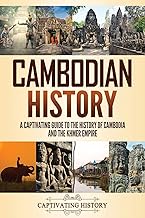
This compact guide offers an accessible overview of Cambodia’s ancient past and the rise of the Khmer Empire. It distills complex topics into digestible sections, with emphasis on major dynasties, architectural achievements, and religious influences that shaped society. The format makes it convenient for quick reading sessions or as a supplementary resource alongside longer histories.
Readers should expect a high-level synthesis that highlights essential events while providing context for later political developments. It’s a practical option for readers who prefer a focused primer with clear, concise explanations and curated facts.
Cambodia: From Pol Pot to Hun Sen and Beyond

Sebastian Strangio examines Cambodia’s recent history, focusing on political transitions, leadership, and the country’s path toward stability and modernization. The work surveys power dynamics, governance, and civil society, providing context for how the nation navigates regional challenges, economic development, and social change.
The narrative presents multiple perspectives, including insights into politics, diplomacy, media, and human rights considerations. It serves readers seeking a nuanced account of Cambodia’s contemporary era and its ongoing evolution within Southeast Asia.
Buying Guide
- Scope and depth: Choose based on whether you want a broad overview, a detailed scholarly work, or a personal narrative to complement academic texts.
- Time period coverage: Look for books that cover ancient Khmer history, the Khmer Empire, colonial influence, and modern Cambodia to obtain a complete arc.
- Perspective balance: Prefer works that present multiple viewpoints, including cultural contexts, political events, and societal impacts.
- Readability vs. rigor: For general readers, select accessible narratives with clear maps and timelines; for scholars, seek rigorous sourcing and critical analysis.
- Supplemental materials: Maps, timelines, and photography can enhance understanding of complex historical periods.
- Format and edition: Consider updated editions for recent scholarship and added interpretive frameworks.
- Audience fit: If teaching or studying, pairing a narrative with an academic text can provide a well-rounded experience.