Medicinal plants offer a practical path to understanding natural remedies and authentic northern-hemisphere botanicals. This guide highlights five authoritative books that cover identification, preparation, and safe usage of herbs for everyday health. The overview below helps readers compare scope, audience, and practical value for home herbology and self-care. A quick summary table follows the introduction to visually compare the featured titles and authors.
| Book | Author(s) |
|---|---|
| Forgotten Home Apothecary: 250 Powerful Remedies at Your Fingertips | Dr. Nicole Apelian (Author) |
| Encyclopedia of Herbal Medicine New Edition: 560 Herbs and Remedies for Common Ailments | Andrew Chevallier (Author) |
| The Lost Book of Herbal Remedies | Claude Davis; Nicole Apelian (Authors) |
| Peterson Field Guide To Medicinal Plants & Herbs Of Eastern & Central North America | Steven Foster; James A. Duke (Authors) |
| Rosemary Gladstar’s Medicinal Herbs: A Beginner’s Guide | Rosemary Gladstar (Author) |
Forgotten Home Apothecary: 250 Powerful Remedies
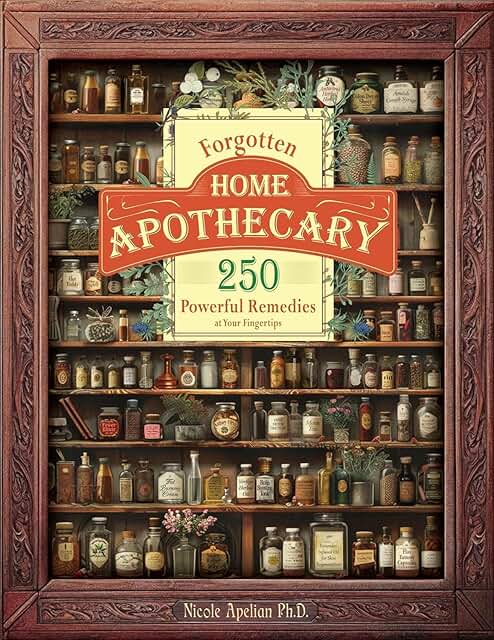
Forgotten Home Apothecary provides a collection of practical, time-tested remedies organized for easy reference. Authored by Dr. Nicole Apelian, the book emphasizes natural solutions that can be prepared at home, with attention to safety, storage, and traditional knowledge. The text aims to bridge modern wellness with ancestral herbal practice, offering actionable instructions that empower readers to create remedies using common garden and pantry ingredients.
Encyclopedia Of Herbal Medicine New Edition

This comprehensive reference by Andrew Chevallier is a cornerstone for herbal knowledge, listing hundreds of herbs and remedies. It covers traditional uses, preparation methods, safety notes, and practical guidance for addressing common ailments. The new edition updates entries with contemporary insights while preserving the classic layout that supports both students and lay readers in building confidence with herbal medicine.
The Lost Book Of Herbal Remedies

The Lost Book Of Herbal Remedies gathers a broad spectrum of herbal solutions and growing methods. Co-authored by Claude Davis and Nicole Apelian, this volume blends field-tested approaches with practical recipes designed for different situations, from everyday discomforts to more persistent concerns. The book emphasizes sustainable harvesting, preparation, and safety in home herbal practice.
Peterson Field Guide To Medicinal Plants & Herbs Of Eastern & Central North America

Peterson’s field guide is renowned for its practical, region-specific approach to identifying medicinal plants in Eastern and Central North America. Co-authored by Steven Foster and James A. Duke, it blends botanical detail with field-use tips, including photos, descriptions, and notes on edible or medicinal applications. It is particularly valued by hikers, gardeners, and naturalists seeking reliable identification and context.
Rosemary Gladstar’s Medicinal Herbs: A Beginner’s Guide

Rosemary Gladstar’s guide is tailored for beginners, focusing on 33 common healing herbs. The book covers growing, harvesting, and preparing herbal remedies, with clear instructions and practical projects. It is designed to help readers build confidence in identifying species, understanding essential plant chemistry, and creating simple, safe remedies at home.
Buying Guide
Key purchase considerations help ensure you select the best fit for your goals in herbal medicine. Consider the following perspectives:
- Audience and level: Choose a book that matches your experience, from beginner guides to advanced reference manuals. Beginner titles emphasize grow-your-own tips and simple preparations; comprehensive references offer deep dives into herb chemistry and broader species lists.
- Scope and regional focus: Some guides cover broad remedies suitable for many ailments, while field guides emphasize correct identification in specific regions. If you explore plants in a particular area, prioritize region-specific titles.
- Identification accuracy: Field guides with photos or detailed illustrations are essential for accurate recognition, reducing misidentification risks in foraging or gardening.
- Preparation and safety: Look for clear instructions on preparation methods, dosages, and safety notes, including potential interactions with medications or allergies.
- Organization and format: Depending on your routine, you may prefer alphabetical indexes, symptom-oriented sections, or seasonal planting information. Some editions include color photos, charts, and glossary terms for quick reference.
- Supplementary resources: Companion websites, app integrations, and additional charts (e.g., growing calendars, harvest times) can extend the utility of a physical book.
- Recipes vs. identification: If your goal is practical remedies, choose titles with explicit recipes and usage tips. If your goal is plant literacy, prioritize identification-focused guides with robust plant profiles.
- Physical attributes: Consider durability (hardcover vs. paperback), print quality, and photo clarity, especially for field use in outdoor environments.
In summary, the best choice aligns with your skill level, intended use (field identification, home remedies, or both), and regional plant availability. Pairing a field guide with a practical remedies book can provide a well-rounded foundation for safe, informed herbal practice at home.