For intermediate players seeking to broaden horizons beyond beginner pieces, carefully chosen piano music books provide balanced challenges, expressive variety, and reliable arrangements. This guide highlights five well-regarded selections that cover classical, pop, and jazz standards, with notes on what makes each suitable for developing technique, sight-reading, and musicality. Each entry includes a direct link to the product on Amazon, a representative image, and key features to help you compare at a glance.
| Product | Focus | Pieces or Level | Highlights |
|---|---|---|---|
| 100 of the Most Beautiful Piano Solos Ever | Classical, Pop, Jazz Standards | 200+ pages; intermediate solo repertoire | Broad repertoire; essential solo pieces for adult students and teachers |
| The Giant Book of Intermediate Classical Piano Music | Classical | 269 pieces; 32 composers | Extensive library for study and performance preparation |
| Selected Piano Masterpieces – Schirmer’s Library, Volume 2128 | Early Intermediate Classical | Pieces by Bach, Schumann, Czerny, more | Concise curated selections from classical masters |
| Classical Piano Masterpieces | Classical, Intermediate | 65 pieces; audio included | Structured collection with audio support |
Note: All five selections are well-suited for intermediate players aiming to refine technique, musical expression, and sight-reading. The following sections provide detailed overviews of each book and how they support skill development.
100 of the Most Beautiful Piano Solos Ever

This collection gathers a diverse set of pieces spanning classical, pop, and jazz standards, curated for intermediate players. The repertoire emphasizes melodic beauty and expressive interpretation, making it a versatile resource for recital preparation, classroom study, and personal recital programming. The book is suitable for adult students and teachers seeking a broad, approachable library of significant solos. Its varied selection helps pianists develop phrasing, dynamics, and nuance across genres.
The Giant Book of Intermediate Classical Piano Music

This expansive classical collection features 269 pieces by 32 composers, presenting a robust pathway for progression from early to mid-intermediate levels. The breadth of composers and eras supports diversified study, enabling pianists to compare styles and idioms. The book serves as a long-term practice resource for students and teachers, with selections crafted to reinforce technique, articulation, and expressive shape across a wide classical spectrum.
Selected Piano Masterpieces – Schirmer’s Library, Volume 2128
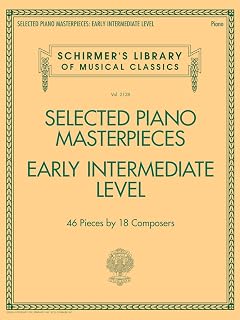
Schirmer’s Library presents early intermediate classical pieces from renowned composers such as Bach, Schumann, and Czerny. The curated selections emphasize musical form, phrasing, and technical control appropriate for progressing learners. The compact collection is ideal for focused practice sessions, performance repertoire, and teacher-directed study that targets clear musical lines and legato playing.
Classical Piano Masterpieces

Offering 65 classical pieces for intermediate players, this book provides a focused collection with audio extras. The selections cover a range of moods and technical demands, allowing pianists to build a solid classical foundation. Audio support can aid in understanding tempo, articulation, and ensemble timing, making it a practical addition to a student’s library for guided practice sessions and supplementary ear training.
First 50 Popular Songs You Should Play on Piano

This beginner-to-intermediate collection features easy piano arrangements of classic pop, jazz, and Broadway tunes. While categorized for those transitioning from beginner levels, the musical choices are accessible yet engaging, offering opportunities to develop rhythm, chord recognition, and melodic flow. The songs can be excellent entry points into repertoire building and performance readiness for developing players.
Buying Guide: Key Purchase Considerations for Intermediate Piano Music Books
- Piece variety and genre balance: Look for a mix of classical, jazz, and pop to develop a well-rounded technique and musical taste.
- Level alignment: Ensure the selections align with your current technical abilities while offering manageable challenges to progress.
- Notes on notation and pedagogy: Prefer editions with clear notation, fingerings, and guidance on dynamics, articulation, and phrase shaping.
- Tempo and annotation support: Books with audio accompaniments or downloadable recordings can aid in independent practice and ensemble understanding.
- Repertoire breadth for performance: A diverse set of pieces helps prepare for recitals, auditions, and versatile programming.
- Teacher and student compatibility: Some volumes cater to study with teachers, while others emphasize self-guided practice; choose accordingly.
- Physical quality and layout: Consider binding, paper thickness, and page layout for comfortable reading during long practice sessions.
- Price-to-content value: Larger collections offer breadth but may be less focused; select based on your goals and available practice time.
To maximize benefits, pair any chosen book with a structured practice plan. Alternate between classical selections to strengthen technique and contemporary pieces to improve musical expressiveness. Regular sight-reading practice with a rotating set of short passages from these books can also accelerate progress. The right combination of repertoire and focused study will support steady growth in intermediate piano performance.