Discover top habit books that offer practical frameworks to build good routines and break bad patterns. This guide highlights five popular titles, each with actionable insights, plus a buying guide to help you choose the right approach for your goals.
| Book | Author / Brand | Key Takeaway |
|---|---|---|
| Atomic Habits: An Easy & Proven Way to Build Good Habits & Break Bad Ones | James Clear | Small changes compound into remarkable results through systems and habits that stick. |
| The Power of Habit: Why We Do What We Do in Life and Business | Charles Duhigg | Habit loops—cue, routine, reward—shape behavior within personal and organizational contexts. |
| Tiny Habits: The Small Changes That Change Everything | BJ Fogg | Incremental, easy-to-start actions build confidence and propel lasting transformation. |
| 1% Success Habits: 10 Daily Habits to Crush Your Day | Brandon Nankivell | Micro-habits and daily routines create momentum toward consistently better days. |
| The High 5 Habit: Take Control of Your Life with One Simple Habit | Mel Robbins | A simple daily gesture can rewire mindset and elevate persistence and optimism. |
Atomic Habits: An Easy & Proven Way to Build Good Habits & Break Bad Ones
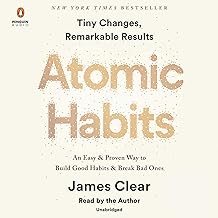
Atomic Habits offers a practical framework for shaping routines through four laws of behavior change: make it obvious, attractive, easy, and satisfying. The book emphasizes identity-based habits, arguing that lasting change starts with how you see yourself. Readers learn to design environments that support positive actions, replace bad triggers with better cues, and implement tiny, repeatable steps that compound over time. The author provides concrete strategies, including habit stacking, implementation intentions, and tracking methods that keep you motivated. The approach is adaptable to personal goals—from health to productivity—and suitable for readers seeking a clear, repeatable process rather than abstract inspiration.
The Power of Habit: Why We Do What We Do in Life and Business

The Power of Habit delves into the science behind why habits exist and how they can be changed. Charles Duhigg introduces the concept of habit loops—cue, routine, reward—applied to individuals, organizations, and communities. The book presents real-world stories, from corporate transformations to personal wellness, illustrating how small, repeatable behaviors can lead to significant outcomes. For readers seeking a broader understanding of habit formation and practical pathways to alter routines in daily life and work, this text offers a comprehensive framework for identifying stimuli, modifying routines, and reinforcing desirable rewards.
Tiny Habits: The Small Changes That Change Everything

Tiny Habits emphasizes starting with minuscule actions that require minimal motivation. BJ Fogg presents a behavior model that shows how easy it is to trigger new routines when the action is small, the prompt is clear, and immediate celebration follows. The method encourages users to attach new habits to existing routines, which lowers resistance and creates a snowball effect over time. This book suits readers who prefer a gentle, incremental path to habit formation, with practical worksheets and examples to guide daily practice.
1% Success Habits: 10 Daily Habits to Crush Your Day

1% Success Habits focuses on compact, high-impact daily actions designed to accelerate personal progress. The book emphasizes consistency, small wins, and deliberate practice to create noticeable improvements over weeks and months. It offers a practical blueprint for integrating ten core habits into busy schedules, along with reflection prompts and simple metrics to track growth. Ideal for readers who want a structured set of daily tasks that deliver steady momentum without overwhelming effort.
The High 5 Habit: Take Control of Your Life with One Simple Habit

The High 5 Habit presents a straightforward daily practice designed to shift mindset and boost resilience. By starting each day with a physical gesture—the high five—the method is said to prime the brain for optimism, focus, and proactive behavior. The approach is accessible to a wide audience, emphasizing consistency, positive reinforcement, and actionable steps that fit into a busy lifestyle. Readers explore how a simple routine can catalyze broader life improvements, from self-discipline to goal attainment.
Buying Guide
When choosing a habit book, consider the following perspectives to find the best fit for your learning style and goals:
- Scope and depth: Some titles offer broad theories (The Power of Habit), while others provide step-by-step systems (Atomic Habits, Tiny Habits). Decide if you want a conceptual framework or a practical, do-this-now guide.
- Actionability: Look for books with protocols you can apply immediately, such as habit stacking, implementation intentions, or micro-habits. Check for worksheets, templates, or checklists.
- Change speed and tone: If you prefer rapid, small steps, Tiny Habits or 1% Success Habits may suit you. For deeper behavioral insight, The Power of Habit provides rich case studies and mechanisms.
- Personal fit: Some readers respond to identity-based approaches (Atomic Habits) while others benefit from cognitive-behavioral framing (Tiny Habits, The High 5 Habit). Consider your motivational style and preferred level of guidance.
- Contextual applicability: For work and teams, The Power of Habit offers organizational examples. For personal health or daily routines, Atomic Habits and Tiny Habits emphasize individual practice.
- Format and accessibility: If you favor quick reads on the go, Kindle editions like 1% Success Habits can be convenient. Hardcover and paperback options suit readers who value long-form guidance.
- Evidence and credibility: Look at whether the book includes real-world examples, practical experiments, and measurable outcomes to support the recommended methods.
Buying decisions should align with your daily life, schedule, and preferred learning method. Whether you seek a broad explanation of why habits form or a concrete program you can start this week, these five titles offer complementary approaches to building better routines and achieving long-term personal growth.