Finding the right 3rd grade social studies workbook can support classroom learning and at-home practice. This guide highlights five top options designed to build civics, geography, history, and economic understanding in an engaging, kid-friendly way. Each pick focuses on core 3rd grade standards, with activities that reinforce critical thinking and independent learning.
A quick overview table summarizes the highlighted products, helping you compare key features at a glance.
| Product | Brand / Author | Key Focus | Sample Feature |
|---|---|---|---|
| 180 Days: Social Studies | Terri McNamara (Author) | Civics, Geography, History practice | Teacher-created practice for daily work |
| 3rd Grade Social Studies: Daily Practice Workbook | ArgoPrep | History, Civics, Geography, Economics | 20 weeks of activities |
| Social Studies Workbook: Grade 3 Special Education | Angela Dansie (Author) | Civics, Economics, Geography, History | Designed for diverse learners |
| Travel the Great States Workbook | School Zone | Geography, Map-reading, U.S. states | 64 pages of state-focused activities |
| Social Studies Workbook (Grade 3) – General | Various | General 3rd grade social studies concepts | Broad civics and history practice |
Below are five detailed product sections, each with a concise overview, key features, and practical considerations to help you choose the best workbook for your student’s needs.
180 Days: Social Studies, Civics for 3rd Grade

This workbook is designed for classroom and home use, offering a structured 180-day sequence of social studies activities. It emphasizes civics concepts, basic American history, geography skills, and foundational economic ideas. The author, Terri McNamara, presents teacher-friendly prompts and answer-check guidance, making it suitable for independent practice or guided instruction. The content aims to reinforce daily study habits while aligning with typical 3rd grade expectations.
Key considerations:
- Strengths: Consistent daily structure, civics emphasis, clear practice style.
- Best for: Families or classrooms seeking a steady, year-long routine with civics foundation.
- Potential drawbacks: May require supplementary parent or teacher guidance for discussion prompts.
3rd Grade Social Studies: Daily Practice Workbook
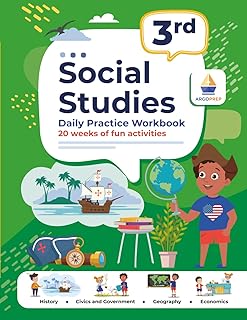
ArgoPrep’s daily practice workbook presents a compact, high-frequency activity set covering history, civics, geography, and economics. The 20-week format supports pacing that fits many school calendars and homeschooling plans. It’s designed to be engaging, with varied question formats that encourage critical thinking and retention. The inclusion of video resources in some listings can enhance understanding when used alongside the workbook.
Key considerations:
- Strengths: Short, repeatable activities; strong coverage of core topics; adaptable to home or class use.
- Best for: Students who benefit from a consistent, time-efficient practice regime.
- Potential drawbacks: Some activities may require teacher or parent scaffolding for deeper discussion.
Social Studies Workbook: Grade 3 Special Education

This workbook focuses on accessibility and inclusive practice for Grade 3 social studies. It covers civics, economics, geography, and history with accommodations in mind for learners who benefit from simplified language, visual supports, and structured activities. The author, Angela Dansie, emphasizes clear objectives, guided practice, and opportunities to demonstrate understanding through varied formats. It’s well-suited for homeschool settings and classrooms serving diverse learners.
Key considerations:
- Strengths: Inclusive design, clear learning targets, supportive for diverse learners.
- Best for: Students who need targeted supports to engage with key social studies concepts.
- Potential drawbacks: May require additional materials or modifications for students with advanced proficiency.
Travel the Great States Workbook: 3rd Grade

School Zone’s Travel the Great States Workbook offers a practical approach to U.S. geography and state knowledge. With 64 pages of activities, it emphasizes map-reading, state locations, and regional understanding, making it a solid complement to broader social studies curricula. The workbook’s user-friendly layout supports independent work and small-group tasks, which is beneficial for classroom use and homeschooling alike.
Key considerations:
- Strengths: Focused geography practice, supportive layout, suitable for independent work.
- Best for: Students needing targeted geography and map skills aligned to 3rd grade standards.
- Potential drawbacks: Geography-heavy sections may need cross-curricular connections to civics and history.
Social Emotional Learning Workbook (High School)

While oriented toward older students, this resource offers a broader perspective on learning skills that support success in social studies tasks, such as emotional regulation and reflective thinking. For families considering transitional skills or students who benefit from social-emotional development, this workbook can be a supplementary tool in a 3rd-grade context when integrated thoughtfully with core social studies activities.
Key considerations:
- Strengths: Supports executive functioning and emotional readiness for learning tasks.
- Best for: Holistic approaches that integrate social studies with SEL concepts.
- Potential drawbacks: Not a primary social studies content workbook for 3rd graders; use as a supplementary resource.
Buying Guide: Key Purchase Considerations
When selecting a 3rd grade social studies workbook, consider these factors to ensure alignment with learning goals and student needs:
- Curriculum alignment: Check if the workbook aligns with your state standards or school district requirements for 3rd grade civics, geography, history, and economics. Look for explicit objectives on each unit or lesson.
- Learning supports: Decide whether you need inclusive features such as visual supports, simplified language, or accommodations for diverse learners. Consider whether the material offers teacher notes or answer keys for ease of use.
- Practice variety: A mix of multiple-choice, short answer, map-reading, hands-on activities, and project prompts helps maintain engagement and reinforces different types of thinking.
- Pacing and structure: Year-long programs with daily or weekly tasks can help establish routines. For homeschooling, shorter, modular formats may fit a flexible schedule.
- Supplemental resources: Some titles include videos or online extensions. Determine whether these align with your teaching style and access to technology.
- Accessibility and inclusivity: If serving diverse learners, prioritize books designed for inclusive education, with clear language and supports for various abilities.
- Durability and print quality: For classroom use, consider print quality and page durability, especially for high-traffic environments and younger readers who may require repeated practice.
- Price and value: Compare total page counts, the breadth of topics, and included activities to assess value relative to your budget.
- Teacher and parent usability: Seek resources with easy-to-follow instructions, answer keys, and rubrics that streamline assessment and feedback.