Exploring the best resources on financial statement analysis and security valuation helps investors interpret company performance, assess value, and make informed decisions. The following selections cover practitioner guides, case-oriented analyses, and managerial insights to suit varying levels of expertise. Below is a quick overview of each title to help you compare depth, focus, and usefulness for different investing goals.
| Product | Author/Brand | Key Focus |
|---|---|---|
| Financial Statement Analysis, 5th Edition: A Practitioner’s Guide (Wiley Finance) | Martin S. Fridson, Fernando Alvarez | Practical techniques for interpreting financial statements and applying valuation concepts in real-world finance. |
| Financial Statement Analysis | K. R. Subramanyam | Foundational methods for evaluating earnings quality, profitability, and risk through financial data. |
| Financial Statements: A Step-by-Step Guide to Understanding and Creating Financial Reports | Thomas Ittelson | Clear, hands-on guidance for building and reading financial statements for non-financial professionals. |
| Financial Statement Analysis for Value Investing (Heilbrunn Center for Graham & Dodd Investing Series) | Stephen Penman, Peter F. Pope | Valuation-focused analysis linking accounting signals to intrinsic value and investment decisions. |
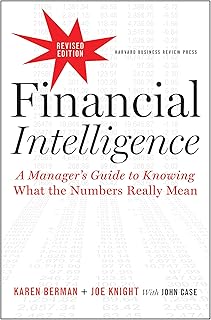
| Financial Intelligence, Revised Edition: A Manager’s Guide to Knowing What the Numbers Really Mean | Karen Berman, Joe Knight, John Case | Managerial interpretation of numbers, actionable insights for decision-making and performance evaluation. |
Note: This introduction highlights five widely respected references that align with the theme of financial statement analysis and security valuation. Each item offers distinct strengths, from practitioner depth to accessible explainers for non-specialists.
Financial Statement Analysis, 5th Edition: A Practitioner’s Guide

Key features and insights:
- Comprehensive practitioner-oriented approach to financial statement interpretation.
- Updated frameworks for assessing earnings quality, risk, and capital structure.
- Practical examples that connect numbers to strategic decisions and valuation scenarios.
Financial Statement Analysis

Key features and insights:
- Solid foundation in analyzing financial statements and ratio tools.
- Emphasis on understanding profitability, liquidity, and solvency signals.
- Accessible for students and professionals seeking a structured analytical workflow.
Financial Statements: A Step-by-Step Guide to Understanding and Creating Financial Reports

Key features and insights:
- Step-by-step approach suitable for beginners and non-finance professionals.
- Practical guidance on preparing and interpreting financial statements.
- Clear explanations of core concepts with real-world examples.
Financial Statement Analysis for Value Investing

Key features and insights:
- Linkages between accounting signals and intrinsic value assessment.
- Value investing perspective with emphasis on earnings, assets, and risk signals.
- Case studies suitable for analysts seeking rigorous valuation frameworks.
Financial Intelligence, Revised Edition
Key features and insights:
- Guided interpretation of numbers for managers and analysts alike.
- Practical emphasis on reading financial stories behind the figures.
- Tools for communicating financial insights to stakeholders and teams.
Buying Guide
When selecting titles on financial statement analysis and security valuation, consider these perspectives and features:
- Audience level: Choose based on your experience, from beginner guides to advanced practitioner handbooks.
- Depth vs. practicality: Some books emphasize theoretical frameworks; others focus on real-world application and case studies.
- Focus area: If your goal is value investing, prioritize works that connect accounting signals to intrinsic value; for corporate decision-making, managerial and financial intelligence titles may be more relevant.
- Edition and updates: Financial reporting standards evolve; newer editions may reflect GAAP/IFRS changes and current market practices.
- Accessibility: Look for clear explanations, examples, and visuals that align with your learning style and professional needs.
- Supplementary materials: Some titles include end-of-chapter problems, datasets, or online resources to reinforce learning.
- Author credibility: Consider authors with practical industry experience or established academic contributions in finance and accounting.
- Format and usability: A compact pocket guide may suit quick-reference needs, while comprehensive manuals suit in-depth research and analysis.