The Gallic Wars by Julius Caesar remains a foundational text for understanding ancient warfare, politics, and Roman expansion. This article surveys five highly regarded editions and translations, highlighting how each edition presents Caesar’s narratives, maps, introductions, and scholarly notes. Whether you seek readable English prose, scholarly apparatus, or Latin-English parallel texts, these picks offer strong options for study, casual reading, or classroom discussion.
| Edition | Author/Editor | Format | Notable Feature |
|---|---|---|---|
| The Gallic War: Seven Commentaries on The Gallic War with an Eighth Commentary by Aulus Hirtius (Oxford World’s Classics) | Julius Caesar; Carolyn Hammond | Paperback | Scholarly introduction and extensive notes |
| The Landmark Julius Caesar: The Complete Works | Kurt A. Raaflaub; Robert B. Strassler | Hardcover | Comprehensive collection with maps and commentary |
| The Gallic Wars | Julius Caesar; William Alexander McDevitte | Paperback | Clear, readable translation with helpful footnotes |
| The Gallic War (Dover Thrift Editions: History) | Julius Caesar; H. J. Edwards | Pocket edition | Economical, accessible translation with introductory notes |
| The Gallic Wars (Latin and English): De Bello Gallico | Julius Caesar | Paperback | Latin-English bilingual text |
The following sections present concise, objective overviews of five relevant editions. Each entry includes a direct link to the Amazon listing, a visual image, and a summary of the edition’s key features that influence readability, interpretation, and academic rigor. This guide helps readers choose a version aligned with goals—historical study, language learning, or general interest.
Oxford World’s Classics: The Gallic War And Commentary
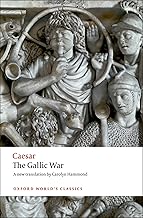
This edition offers Julius Caesar’s Gallic War in a widely respected translation with extensive scholarly apparatus. The introduction situates Caesar’s campaigns within Roman politics and military strategy. An eighth Hirtius commentary provides additional historical context. The translation emphasizes readability for modern readers while preserving key original nuances, making it suitable for students and general readers alike.
The Landmark Julius Caesar: The Complete Works

This comprehensive collection gathers Caesar’s major works, including the Gallic War, Civil War, and other Albanic and African campaigns. Edited by Kurt A. Raaflaub and Robert B. Strassler, it features detailed introductions, maps, and robust scholarly notes. The Landmark edition is ideal for readers seeking a single-volume reference with authoritative scholarship, suitable for seminars or in-depth study.
The Gallic Wars (McDevitte Translation)

This edition presents Caesar’s narrative in a classic translation by William Alexander McDevitte. The translation emphasizes clarity and fidelity to classical Latin, with a translator’s notes that guide readers through historical references and military tactics. It is a strong choice for readers who value linguistic precision and accessible prose while exploring the Gallic campaigns.
The Gallic War (Dover Thrift Editions)

The Dover Thrift Edition offers a compact, affordable translation by H. J. Edwards. This edition is designed for ease of use and teaching, featuring explanatory notes and a straightforward narrative flow. It is well-suited for readers who want a portable option for quick study sessions or classroom use without sacrificing essential historical details.
The Gallic Wars (Latin and English)

This bilingual edition presents Caesar’s Latin text alongside an English translation, facilitating language study and comparative reading. It is ideal for students practicing Latin or readers who wish to observe how Caesar’s phrasing translates across languages. The parallel text supports precise analysis of rhetoric, military descriptions, and narrative structure.
Buying Guide: Key Purchase Considerations
- Purpose: Decide whether your focus is scholarly scholarship, classroom use, or accessible reading. Editions with robust introductions, maps, and notes suit academic study; bilingual versions aid language learners.
- Translation vs. Latin-Only: Translated editions save time and provide interpretive context; Latin-English parallel texts are valuable for linguistic study and historical linguistics.
- Annotations and Notes: Annotations help explain ancient place names, tactics, and political context. Consider the depth and consistency of notes and the reliability of the editor.
- Editorial Scope: Some collections include multiple Caesar works, offering a broader view of his campaigns and political writings; others focus strictly on the Gallic War for concentrated study.
- Format and Portability: Paperback and Dover editions are lighter and more affordable, while Landmark and Oxford World’s Classics tend to include richer scholarly apparatus and better print quality.
- Maps and Appendices: Look for editions with historical maps, genealogies, and appendices that aid navigation through the campaigns and Caesar’s strategic decisions.
- Reader Experience: If you prefer narrative readability, favor translations with fluent prose and helpful introductions. If you enjoy textual comparison, a bilingual edition can be more engaging.
In choosing among these editions, readers may balance portability, price, and depth of scholarly apparatus. For students and researchers, the Oxford World’s Classics and Landmark Julius Caesar volumes offer strong scholarly support. For language learners and enthusiasts of Latin, the bilingual edition provides direct access to the original text. Across formats, each edition preserves Caesar’s compelling account of Roman military campaigns and the political calculus that shaped Roman expansion.