Starting calculus can feel daunting, but the right introductory books make the difference. This guide highlights five beginner-friendly options that cover core concepts, step-by-step methods, and plenty of practice. Each pick aims to build confidence, from foundational algebra to the first rigorous limits and derivatives. Use the table below to compare essential details at a glance and then explore deeper in the product sections.
| Title | Author / Brand | Key Benefit |
|---|---|---|
| Calculus For Dummies (For Dummies) | Mark Ryan (Author) | Accessible intro with plain-English explanations and practical examples |
| Calculus for Beginners: The Ultimate Step by Step Guide | Reza Nazari (Author) | Progressive, scaffolded lessons designed for self-paced learning |
| Precalculus for Beginners: Simplifying Functions, Equations, and Trigonometry for Success in Calculus | Jacob Kohannim (Author) | Strong precalculus foundation to ease calculus transitions |
| Essential Calculus Skills Practice Workbook with Full Solutions | Chris McMullen (Author) | Extensive practice with complete solutions for self-checks |
| Calculus Made Easy | Silvanus P. Thompson, Martin Gardner | Classic approach that simplifies core ideas without heavy notation |
Calculus For Dummies (For Dummies)
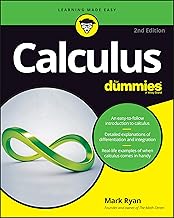
Calculus For Dummies offers a user-friendly pathway into differential and integral calculus. The author emphasizes plain-language explanations, visual aids, and real-world examples that demystify abstract concepts. This guide introduces limits, derivatives, integrals, and applications with a focus on building intuition and procedural fluency. Practice questions are integrated throughout, with concise summaries to reinforce learning. Students new to calculus benefit from the gradual pacing and accessible problem-solving strategies that help bridge from algebra and geometry to more advanced topics.
Key features include a structured progression from fundamental ideas to complex applications, checklists for test prep, and tips for avoiding common mistakes. The book also includes worked-out examples that illustrate step-by-step reasoning, making it a solid companion for tutoring sessions or self-study. While designed for beginners, readers can revisit chapters for refresher content as they move into more rigorous calculus coursework. Overall, it acts as a reliable primer and reference for foundational calculus concepts.
Calculus for Beginners: The Ultimate Step by Step Guide to Acing Calculus

Reza Nazari’s Calculus for Beginners is crafted as a comprehensive step-by-step manual. It emphasizes gradual progression, with clear explanations and worked examples that align with typical high school to early college curricula. Topics likely covered include limits, derivatives, integrals, applications, and problem-solving techniques designed to boost confidence. The structured approach supports learners who benefit from explicit sequencing and plenty of practice opportunities. By presenting math in digestible chunks, the book aims to reduce intimidation and foster consistent study habits for steady improvement.
The reader benefits from concise rationale, visual aids, and end-of-chapter exercises that reinforce key ideas. While the book is aimed at beginners, it also helps solidify a strong foundation for more advanced calculus topics. With patient guidance and practical tasks, learners can track progress and build fluency in core calculus methods and their applications.
Precalculus for Beginners: Simplifying Functions, Equations, and Trigonometry for Success in Calculus

Precalculus for Beginners focuses on building the essential skills that directly support calculus readiness. By simplifying functions, equations, and trigonometry, this guide provides a bridge from algebra and graphing to calculus concepts such as limits and derivative interpretation. The approach typically includes clear explanations, numerous examples, and practice problems aimed at reinforcing algebraic manipulation, function analysis, and trigonometric identities. For students new to higher-level math, the book’s emphasis on intuitive understanding helps reduce cognitive load while increasing retention of critical topics.
Readers can expect structured lessons that gradually increase complexity, with practical tips for mastering graphs and transformations. This resource is especially helpful for those who need to shore up precalculus foundations before tackling integration, optimization, or introductory differential equations in calculus courses. The emphasis on stepwise progression supports steady, confident learning across topics.
Essential Calculus Skills Practice Workbook with Full Solutions

This workbook focuses on practical skill-building with full solutions, making it a strong choice for drill-and-practice learning. It covers core calculus topics such as limits, derivatives, applications of differentiation, and fundamental integrals. The availability of full solutions helps learners verify reasoning and understand problem-solving steps. The structured problem sets encourage regular practice and gradual mastery, essential for retention and exam readiness. The workbook format is particularly useful for students who prefer a hands-on approach and need additional practice outside textbook chapters.
Teachers and tutors can leverage this resource to supplement coursework, assign targeted problems, and track progress through timed quizzes. For self-learners, the guided solutions provide immediate feedback, reducing frustration and promoting iterative improvement. Overall, the workbook supports a practical, problem-first route to acquiring essential calculus competencies.
Calculus Made Easy

Calculus Made Easy is a classic text that aims to demystify calculus through straightforward language and accessible explanations. The book emphasizes core ideas over heavy formalism, focusing on intuitive understanding of limits, derivatives, and integrals. It is well-suited for readers who prefer a less intimidating entry point, with practical examples that illuminate how calculus is used in real-world scenarios. While it may not cover every advanced nuance, it provides a solid conceptual framework and stepwise problem-solving approaches that help beginners gain confident footing before moving to more rigorous material.
The writing style historically caters to readers seeking clarity and patience, making it a strong companion for self-study, tutoring, or classroom use. By prioritizing core concepts and approachable explanations, the book helps learners establish a durable mental model of calculus fundamentals.
Buying Guide: Key Purchase Considerations and Comparisons
- Learning pace and style: Beginners vary in how quickly they grasp new concepts. Books with step-by-step guidance and abundant worked examples tend to support slower, deliberate learning, while those with concise explanations suit quick readers who enjoy problem sets.
- Foundational emphasis: If you need to shore up precalculus or algebra skills, consider titles that bridge to calculus, such as precalculus-focused books or those with strong review sections.
- Practice and solutions: Self-study often benefits from access to full solutions or answer keys. Practice-heavy titles help reinforce skills and increase retention, especially for core techniques in differentiation and integration.
- Presentation and accessibility: Visual aids, clear diagrams, and friendly layouts can significantly improve comprehension for visual learners and those new to mathematical notation.
- Audience and tone: Some readers prefer light, approachable language, while others favor rigorous derivations. Choose a tone that matches your comfort level with mathematical rigor.
- Supplemental resources: Look for accompanying workbooks, online resources, or companion problem sets. These can provide varied practice and alternative explanations.
- Adaptability: If you anticipate needing to revisit material later, consider evergreen classics that stay relevant and provide enduring explanations, such as foundational texts with broad applicability.
In selecting calculus books for beginners, weigh your goals: quick start with practical applications, thorough theoretical grounding, or a steady blend of both. For many learners, a combination of a friendly introductory title plus a practice-focused workbook offers the most balanced path toward confident calculus mastery.